
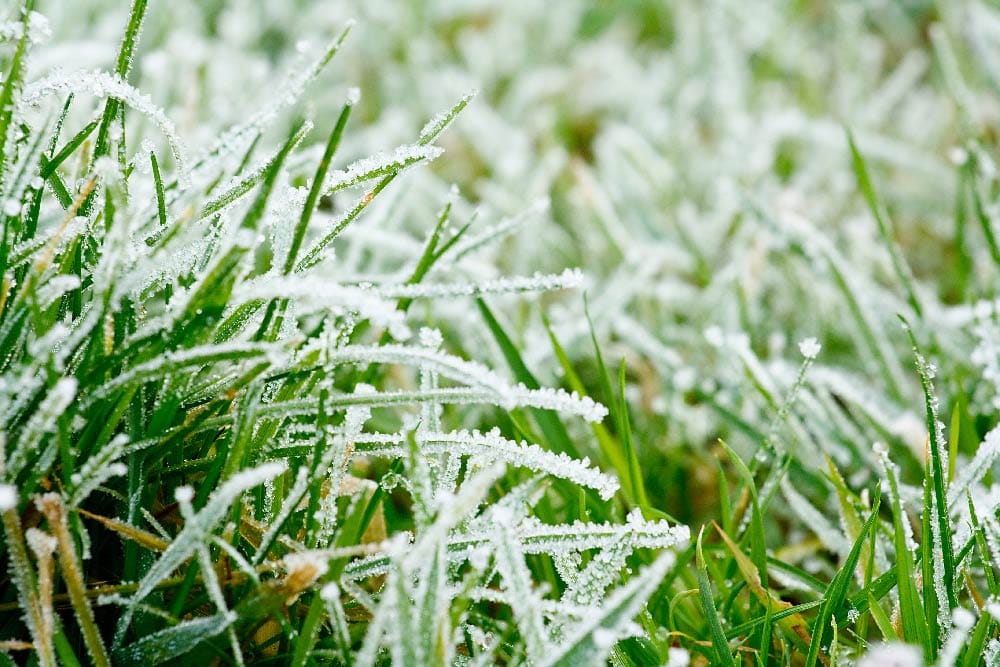
Will My Irrigation System Freeze in the Winter?
Yes, your irrigation system will freeze and likely sustain heavy damage if you do not professionally winterize it before the ground reaches a deep frost. In Upstate New York, frost penetrates between one and four feet deep, which causes trapped water to expand and rupture pipes, valves, and sprinkler heads. Consequently, you must perform a professional air blowout to remove all moisture from the lines and protect your irrigation installation.
How Does Winter Weather Affect My Irrigation Installation?
Many homeowners ask, “Will My Irrigation System Freeze in the Winter?” The answer depends entirely on your maintenance routine. In Monroe County, winter temperatures regularly drop below freezing for weeks. Because water expands by roughly 9% when it turns to ice, it creates immense internal pressure. This force easily cracks high-density polyethylene (HDPE) and PVC piping.
Furthermore, freezing ruins delicate internal components. For example, the solenoid valves and backflow preventers are highly sensitive to ice. If you neglect your irrigation installation, you may face thousands of dollars in repairs come spring. Therefore, early prevention is the most cost-effective strategy for any homeowner.
The Role of Frost Depth in Upstate New York
Frost depth refers to the maximum depth where soil moisture freezes. In our region, this depth varies based on snow cover. Snow acts as an insulator for the earth. However, during “brown winters” with no snow, the frost goes much deeper. Consequently, even deeply buried pipes in your irrigation installation remain at risk.
Why Do Gravity-Drained Systems Still Fail?
Some older designs rely on gravity to drain water. You might think these systems are safe from a deep freeze. However, the ground constantly shifts due to freeze-thaw cycles. This movement creates “bellies” or low spots in the lines. As a result, water pools in these pockets and cannot escape. When that trapped water freezes, it bursts the pipe from the inside out.
Transitioning to a professional blowout method is much safer. Our technicians use high-volume air to clear these hidden pools. This ensures your irrigation installation stays dry and functional regardless of ground movement.
Residential Irrigation Installation and Maintenance: Finding the Right One Near Me
When you look for maintenance near you, focus on experience and equipment. At Irrigation Tech, we bring nearly 40 years of local experience to every job. We understand the specific climate challenges of the Finger Lakes and Monroe County. Furthermore, we use industrial-grade compressors for every irrigation installation we service.
Comparison: Professional Blowout vs. Manual Draining
| Feature | Professional Blowout | Manual Draining |
| Air Volume | 50+ CFM (High Volume) | None |
| Water Removal | 99% Effective | 60-70% Effective |
| Component Safety | Protects valves & heads | Leaves heads at risk |
| Warranty | Often required for coverage | Usually voids warranty |
The Technical Process of Professional Winterization
To protect your irrigation installation, we follow a strict technical protocol. First, we shut off the main water supply to the system. Next, we attach a high-volume compressor to the blow-out port. It is vital to use high volume (CFM) rather than just high pressure (PSI). High pressure alone can melt plastic gears or pop heads off.
Instead, we use a large volume of air to push the “slug” of water through the lines. We cycle through each zone individually. We continue this until only a fine mist exits the sprinkler heads. Finally, we open the test cocks on the backflow prevention device. This ensures the internal springs and seals do not crack during the coldest months.
When Should I Schedule My Maintenance?
Timing is critical for your irrigation installation. Usually, we suggest scheduling your winterization between early October and late November. While the ground stays warm in early autumn, the air temperature can drop quickly. A single night of extreme cold can damage your backflow device because it sits above ground. Thus, you should not wait for the first snow to call a technician.
Key Steps for Fall Protection
Monitor the Forecast: Watch for “hard freeze” warnings.
Insulate Exposed Pipes: Wrap any pipe above the frost line.
Book Early: Local pros fill their schedules by mid-October.
Confirm the Blowout: Ensure the tech uses a compressor, not just a drain.
Expert Q&A Section
How much air pressure is safe for my pipes?
We generally keep the pressure below 50 PSI for PVC systems and 80 PSI for polyethylene. However, the air volume (CFM) is more important than the pressure for a clean blowout.
What is a backflow preventer?
This is a required safety device that prevents irrigation water from entering your home’s drinking water. It is the most expensive part of your irrigation installation to replace if it freezes.
Can I use my shop compressor to do it myself?
Most home shop compressors lack the volume (CFM) to clear the lines. They might blow a hole through the water but leave plenty behind in the low spots.
Does snow cover help protect the pipes?
Yes, snow acts as an insulator. It can keep the frost from penetrating as deep into the soil. However, you cannot rely on snow as your only protection.
What happens if I miss the winterization window?
If the ground freezes before your blowout, we may not be able to clear the lines. In this case, you must wrap all exposed components and hope for a mid-winter thaw.
Homeowners in the greater Monroe County area can trust the specialist expertise of Irrigation Tech for all their residential irrigation needs.
Call 585-225-0380 or email info@irrigationtech.com