

Best Time to Install an Irrigation System in Rochester, NY
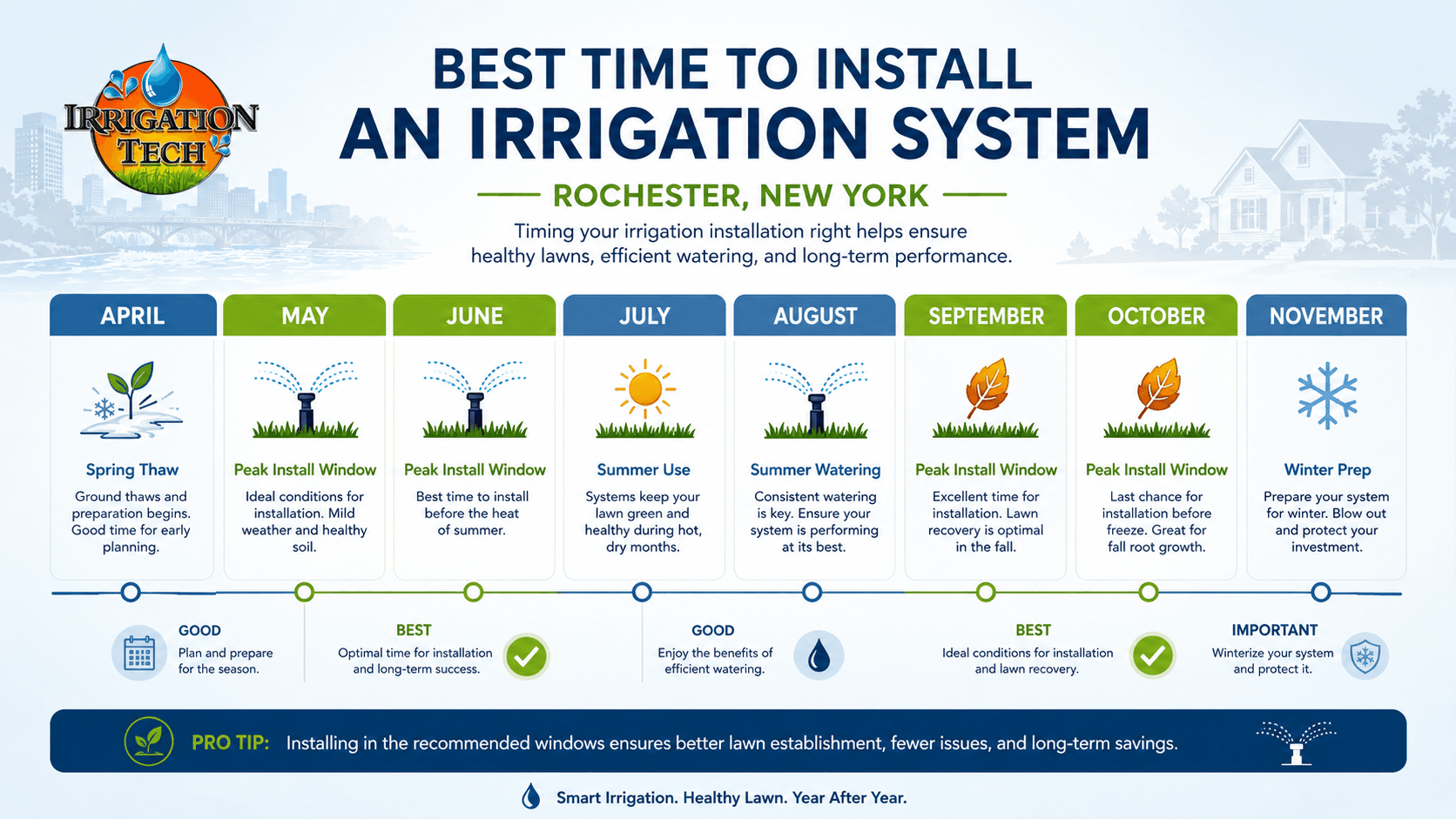
In Rochester, NY, an irrigation system can generally be installed from April through November when the ground is workable. The strongest windows are late spring through early summer and early to mid-fall. Fall is often easiest on the lawn, while spring and early summer are better when you want the system ready before hot, dry weather.
The right timing depends on more than the calendar. Ground thaw, soil moisture, lawn recovery, contractor scheduling, backflow planning, system testing, and winterization all affect the best installation window.
In Rochester, irrigation systems can usually be installed from April through November when the ground is workable. May and June are best for getting ready before summer, while September and October are best for lawn recovery. April and November can work if soil and frost conditions allow.
What Is the Best Time to Install an Irrigation System in Rochester, NY?
The best time to install an irrigation system in Rochester, NY, is late spring through early summer or early to mid-fall. April through November can work when the ground is thawed, workable, and not too close to freezing weather.
Fall gets a lot of attention because the soil is often easier to work, the lawn is under less heat stress, and the system can be ready before the next growing season. That makes September and October strong installation months for many Rochester-area properties.
Spring has a different advantage. A system installed in May or June is ready before peak summer watering demand. That matters when the lawn already has dry spots, uneven color, stressed planting beds, or too much hose dragging.
The best answer is not “fall only.” For Rochester, the better answer is April through November when conditions allow, with May, June, September, and October usually offering the strongest balance of ground condition, lawn recovery, and system readiness.
For homeowners comparing timing and next steps, Irrigation Tech’s irrigation system installation in Rochester page explains how a new system is planned, scheduled, installed, tested, and demonstrated. Irrigation Tech states that it has installed, modified, repaired, or expanded more than 1,000 automatic landscape irrigation systems in Rochester, Monroe County, and the Finger Lakes Region.
Why Is Fall Often the Best Time for Irrigation Installation in Rochester?
Fall is often the best time because Rochester lawns recover well in cooler weather, soil is usually easier to work than in summer, and the system can be ready before spring. The project still needs enough time before winterization.
Fall works well because it gives the lawn a better recovery window. Irrigation installation creates temporary surface disturbance where underground lines, sprinkler heads, and valve boxes are installed. Cooler weather gives turf a cleaner path back.
Cooler Weather Helps the Lawn Recover
Rochester-area lawns are commonly built around cool-season grasses. Cool-season grass grows most actively when temperatures are moderate, not during the hottest stretch of summer.
Cornell Cooperative Extension Monroe County says the best time to seed new lawns is August through September. Cornell Turfgrass also says the middle of August through September is favorable for seed and grass seedlings because of cooler temperatures, adequate moisture, and less weed competition.
That does not mean every irrigation system must be installed by September 15. It means fall often gives the lawn a better chance to recover from installation disturbance.
Fall Soil Is Usually Easier to Work Than Dry Summer Soil
Fall soil is often moist enough to work without being as hard as dry summer soil. Good soil moisture helps installation crews work more cleanly around turf areas, planting beds, and underground piping.
The ideal soil condition is not mud. Saturated soil creates its own problems. The best condition is stable, workable soil that allows installation equipment to place pipe and components without unnecessary surface damage.
The System Is Ready Before Next Spring
Fall installation gives the homeowner a system that is already designed, installed, tested, and ready before spring growth begins. That matters in Rochester because spring calendars fill fast with start-ups, repairs, backflow testing, and new installation requests.
A well-timed fall project also gives you one team to call when the season changes. Irrigation Tech is a full-service irrigation company for Rochester and the Finger Lakes, so the same type of local expertise that goes into installation also supports seasonal service, backflow work, troubleshooting, and winterization.
Is Spring a Good Time to Install a Sprinkler System in Rochester?
Spring is a good time to install a sprinkler system in Rochester once the ground has thawed and freeze risk has dropped. It is especially useful when you want the system ready before summer heat and dry lawn stress.
Spring is the right choice when summer watering is the main goal. A system installed in spring can protect turf, planting beds, and new landscape work before July and August stress arrive.
Spring Works Best After the Ground Thaws
Ground thaw means the soil is no longer frozen and can be worked safely. Underground irrigation installation requires workable soil because pipe, fittings, valves, and sprinkler heads must be placed below the surface.
April can work in Rochester when the ground has thawed and the property is not too wet. May is often a stronger window because the ground is usually more workable and the installation season is underway.
Spring Installation Helps Before Summer Water Demand
Spring installation gives the system time to operate before peak heat. That matters when the lawn already shows uneven coverage, dry patches, or weak growth from hand watering.
A professionally designed system also solves a common homeowner problem: treating the whole property like one flat watering area. Lawns, slopes, sunny areas, shaded beds, and foundation plantings often need different amounts of water.
Spring Scheduling Can Fill Quickly
Spring is also a busy irrigation season. Existing systems need start-up service, repairs, controller adjustments, backflow testing, and mid-season preparation. New installations compete with that seasonal demand.
A spring project works best when the estimate and design start before the homeowner wants the system installed. Waiting until the first hot week of summer usually means fewer scheduling options.
For spring timing and seasonal readiness, Irrigation Tech’s guide to irrigation de-winterization is a useful next read. It connects spring start-up, system readiness, and early-season operation.
Can You Install an Irrigation System in Summer?
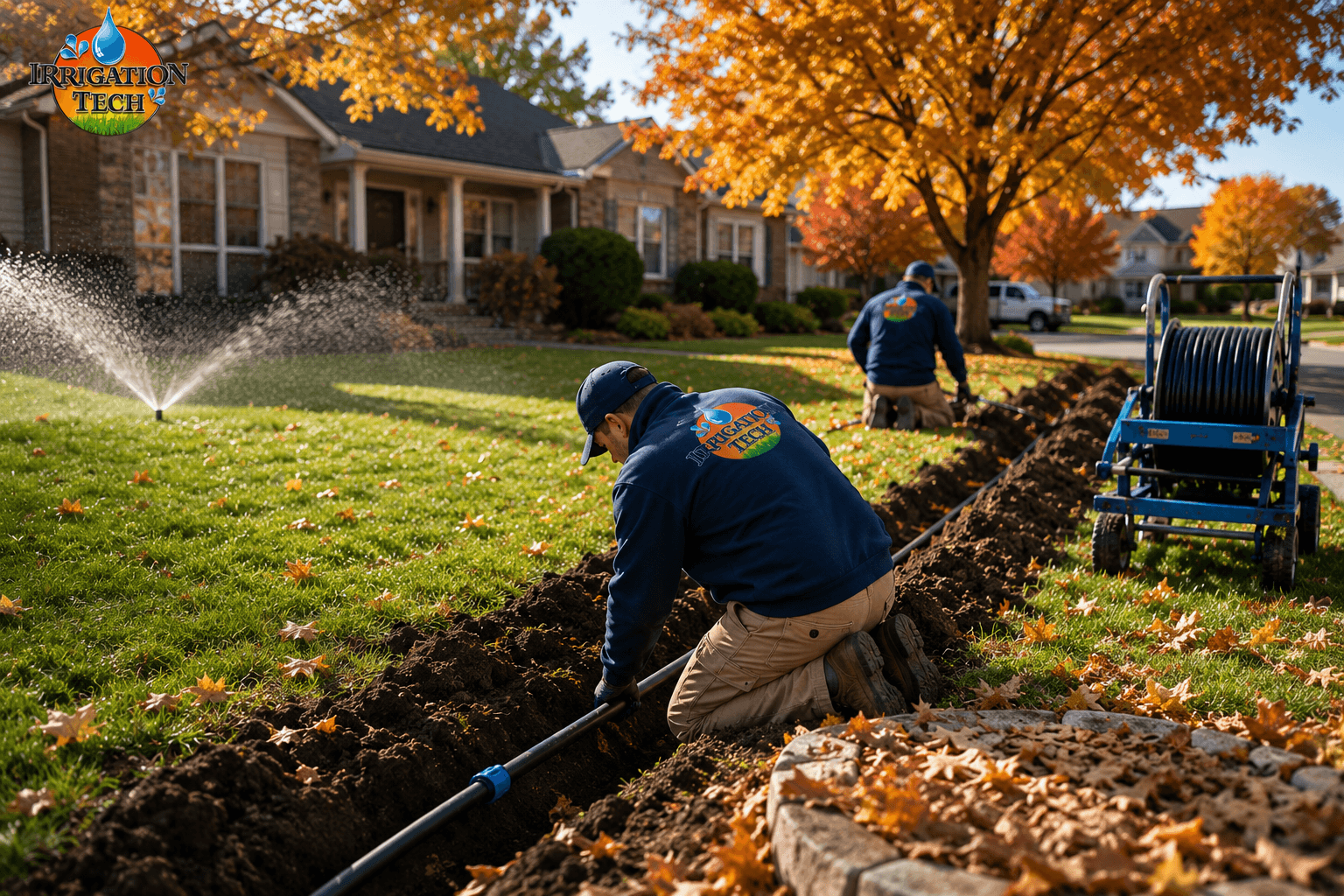
Yes, irrigation systems can be installed in summer in Rochester, but summer is usually busier and harder on stressed lawns. It works best when dry spots, new landscaping, travel plans, or watering problems make irrigation urgent.
Summer is not a bad installation season. It is a less forgiving installation season. The lawn is often under heat stress, the soil can be dry or compacted, and contractor schedules are active with repairs, service calls, and urgent watering problems.
Summer Installation Solves Immediate Watering Problems
Summer installation makes sense when the property already needs water. Dry patches, brown turf, new plantings, and uneven coverage create real pressure by July and August.
A summer system can reduce hose dragging, missed watering, overwatering, and under-watered zones. It also gives the homeowner control during vacations, busy workweeks, and dry stretches.
Summer Installation Needs Better Recovery Planning
Summer heat slows visible lawn recovery after installation disturbance. Dry soil also makes installation conditions less forgiving.
That does not make summer installation wrong. It means the project needs better planning. The crew has to account for soil condition, existing lawn stress, watering needs after installation, and how quickly the system will be used.
This is where design matters. A sprinkler system built around pressure, GPM, zones, sprinkler placement, and property layout performs better than a system installed only to “get water on the lawn.” Irrigation Tech’s custom irrigation system design page explains how zoning, pressure, GPM, sprinkler placement, and property layout affect long-term system performance. Irrigation Tech’s design page also defines head-to-head coverage, zoning strategy, pressure and GPM planning, and control planning as core parts of system design.
How Late in Fall Can an Irrigation System Be Installed in Rochester?
Late fall installation can work in Rochester when the ground is still workable and there is time to test, adjust, and winterize the system. November is condition-dependent; frozen soil or immediate freeze risk changes the answer.
Late fall is the most misunderstood installation window. A warm November week does not automatically make the project a good fit. The real question is whether the full installation process can be completed before freezing conditions take over.
November Is Possible When Conditions Allow
November installation works when the soil is not frozen, the ground is stable, and the schedule allows the system to be installed and tested. It becomes less practical when the ground starts freezing, heavy rain saturates the soil, or winterization deadlines are too close.
November belongs in the conditional category. It is not automatically too late, but it is not the same as September or October.
Late Fall Requires Testing Before Winterization
An irrigation system needs more than pipe in the ground. Each zone has to run. Sprinkler heads need adjustment. Coverage needs review. The controller needs setup. The water connection and backflow device need the proper attention.
The cutoff is not the first cold night. It is the point where installation, zone testing, controller setup, backflow work, and winterization can no longer be completed safely before sustained freezing conditions.
That sentence matters for Rochester. Winterization is not an optional add-on in a freeze climate. It protects the system before trapped water can damage lines, heads, valves, and related components.
Frozen Ground Changes the Answer
Frozen ground changes the installation window. Underground irrigation work depends on soil that can be opened, restored, and stabilized. Once the ground freezes or becomes too wet to work cleanly, installation usually shifts into planning mode for the next season.
Use this late-fall checklist before assuming November still works:
- Ground is not frozen
- Soil is workable, not saturated
- Utility marking can be completed
- Backflow and plumbing work can be scheduled
- Every zone can be tested
- Controller setup can be verified
- Winterization can happen before sustained freezing conditions
Which Months Are Best for Irrigation Installation in Rochester?
The best months are usually May, June, September, and October. April and November can work when conditions allow. July and August are workable but less ideal because heat, dry soil, and installer demand can add pressure.
The table below gives a practical month-by-month view. It is not a guarantee for every property or every year. It is a planning guide for Rochester-area conditions.
| Month / Season | Recommendation | Best For | Watch-Out |
|---|---|---|---|
| April | Conditional | Early planners | Ground thaw, wet soil, frost risk |
| May | Strong | Getting ready before summer | Busy start-up season |
| June | Strong | Installing before peak heat | Schedule availability |
| July | Workable | Urgent watering problems | Heat stress and dry soil |
| August | Workable to strong | Late-summer planning, fall prep | Heat stress early in the month |
| September | Excellent | Lawn recovery and fall installation | Book before fall schedule fills |
| October | Excellent to conditional | Next-season readiness | Leave time before winterization |
| November | Conditional | Late-season installation | Ground freeze and testing runway |
| December–March | Usually avoid | Planning and estimates | Frozen ground |
There is no single date that works for every Rochester property. A mild April, a wet spring, a dry August, or an early November freeze can change the answer. The safest guidance is to plan inside the April–November install season, then confirm timing based on soil condition, schedule availability, and whether the system can be tested before winterization.
Budget also affects timing. A homeowner comparing spring and fall installation usually wants to know what drives cost before requesting a proposal. Irrigation Tech’s guide to irrigation installation costs and best practices is a good next step after choosing a target season.
What Local Factors Affect the Best Installation Time?
The best installation time depends on ground condition, lawn recovery, water pressure, system design, utility marking, backflow requirements, and winterization timing. Rochester properties need timing that supports both installation quality and long-term system performance.
A good installation window is not just a gap in the contractor’s calendar. It is the period when the property, weather, design, and system schedule line up.
The Irrigation Tech Rochester Install Window Framework
Irrigation Tech defines a Rochester irrigation install window as the period when workable ground, recoverable turf, clear watering need, system testing time, and winterization runway line up.
The framework uses 5 local factors:
- Ground condition: Is the soil thawed, stable, and workable?
- Lawn recovery: Can the turf recover from installation disturbance?
- Watering need: Does the property need irrigation now, or is the goal next-season readiness?
- System readiness: Is there time to test zones, controller settings, pressure, and coverage?
- Winterization runway: Is there enough time to protect the system before freezing weather?
Field note from Irrigation Tech: On Rochester-area properties, the latest possible install date is not just the last warm day of the year. The better question is whether there is still enough time to install the system, test every zone, adjust coverage, confirm controller operation, and winterize before sustained freezing weather.
[Brand proof needed — add one real example from the team before publishing.]
Timing Affects More Than Digging
A proper irrigation system is designed around the property. Water pressure affects how sprinkler heads perform. GPM, or gallons per minute, affects how many heads can run in one zone. Zoning divides the property into areas with different watering needs. Head-to-head coverage places sprinkler heads so the spray pattern reaches the next head for even coverage.
Those design details affect timing because the project has to move through planning, layout, utility marking, installation, testing, and customer walkthrough.
Backflow planning also matters. A backflow preventer is a device that helps protect potable water from reverse flow. Monroe County states that its cross-connection control program protects public water against backflow contamination and reviews backflow prevention device plans and specifications.
Underground work also requires utility awareness. New York 811 says homeowners planning to dig must contact 811 at least 48 hours and no more than 10 working days before digging, excluding weekends and legal holidays.
That is why a good installation date is not just “the first open day.” The date has to support the full job.
Irrigation Tech handles both irrigation and backflow work, which reduces the need to coordinate separate vendors for the same system. For compliance-related questions, see Irrigation Tech’s page on certified backflow testing.
Should You Install Irrigation Before New Sod or Landscaping?
Yes, install irrigation before new sod or major landscaping when possible. Installing first avoids disturbing finished lawn areas and helps new turf, planting beds, and landscape upgrades receive consistent water from the start.
Irrigation timing becomes more important when the property is already scheduled for sod, seeding, planting beds, grading, or landscape renovation.
New Sod Benefits from Irrigation First
New sod needs consistent moisture after installation. A sprinkler system installed before sod placement reduces the need to disturb a finished lawn later.
The system layout can also be matched to the final lawn area. That gives the turf better coverage from the start.
Landscape Renovations Are Easier to Coordinate Before Final Planting
Planting beds, trees, shrubs, and lawn areas do not always need the same watering method. Lawn areas often use spray or rotor heads. Beds and plantings often benefit from drip irrigation or targeted watering.
Installing irrigation before final planting allows zones, heads, drip lines, and controller settings to match the finished landscape design.
A strong design process also prevents a common frustration: finishing the lawn first, then reopening areas to place irrigation lines later. When irrigation is part of the landscape plan early, the finished property has a cleaner path to long-term performance.
When Should You Schedule an Irrigation Estimate?
Schedule an irrigation estimate before your preferred installation season. In Rochester, that often means planning in winter for spring installation, spring for summer work, and summer for fall installation.
The best time to call is earlier than the month you want the system installed. A new system needs a design, proposal, schedule, utility marking, installation, testing, and walkthrough.
Schedule Earlier Than the Month You Want Installation
Use this timing guide:
- Want spring installation? Start planning in winter or early spring.
- Want summer installation? Request the estimate in spring.
- Want fall installation? Request the estimate in summer.
- Want late-fall installation? Ask early because weather and winterization control the deadline.
Early planning gives the contractor time to evaluate the property and gives the homeowner more schedule options.
Design and Backflow Planning Need Lead Time
Irrigation Tech’s installation process starts with a written proposal and scope of work. Its installation page also describes plumbing tie-in, backflow preventer installation, underground supply lines, sprinkler heads, controller setup, and final system demonstration.
That process takes planning. The estimate is not just a price conversation. It starts the design and scheduling path.
Irrigation Tech is not a general landscaper that occasionally installs sprinklers. Irrigation is the company’s core work, and the system is planned around real site conditions: water source, pressure, soil, slopes, lawn areas, planting beds, and seasonal timing. Schedule an irrigation estimate with Irrigation Tech and get a clear proposal for your Rochester-area property.
Frequently Asked Questions About Irrigation Installation Timing in Rochester
Rochester irrigation timing depends on thawed soil, lawn recovery, watering needs, contractor availability, and freeze risk. The best answers are seasonal, not one-size-fits-all.
What is the best month to install a sprinkler system in Rochester, NY?
May, June, September, and October are usually the strongest months. May and June prepare the system for summer watering. September and October support lawn recovery and next-season readiness.
Is May a good time to install an irrigation system in Rochester?
Yes. May is often a strong installation month once the ground has thawed and freeze risk has dropped. It gives the system time to operate before summer heat and dry conditions arrive.
Is fall better than spring for sprinkler installation?
Fall is often better for lawn recovery and scheduling. Spring is better when the system needs to be ready before summer watering demand. The right choice depends on the homeowner’s goal.
Can irrigation be installed in July or August?
Yes. July and August installations work when watering problems are urgent. Summer installation requires better recovery planning because the lawn can be under heat stress and the soil can be dry.
Is November too late to install sprinklers in Rochester?
November is not always too late. It works when the ground is workable and there is time to install, test, adjust, and winterize the system before sustained freezing conditions.
Does the ground need to thaw before irrigation installation?
Yes. Underground irrigation installation requires workable soil. Frozen or overly saturated ground limits clean installation and can shift the project into a later window.
Will sprinkler installation damage my lawn?
Sprinkler installation creates temporary lawn disturbance where underground lines and components are placed. Good timing, careful installation, proper watering, and turf recovery planning reduce visible disruption.
Do I need a backflow preventer for an irrigation system in Rochester?
Many irrigation systems require backflow prevention to protect potable water. Local requirements, water authority review, and device approval must be confirmed before installation.
What Should You Remember About Installing Irrigation in Rochester?
The best irrigation installation time in Rochester is any workable window from April through November, with late spring, early summer, and early fall usually offering the strongest balance of soil conditions, lawn recovery, and system readiness.
Fall is often the best recovery window. Spring and early summer are better when the system needs to be ready before heat and dry weather. Summer works when the watering need is urgent. November depends on soil condition, testing time, and winterization runway.
A good irrigation installation is not just about getting pipe in the ground. It is about designing the system around pressure, zones, coverage, backflow requirements, lawn recovery, and Rochester’s freeze season.
Irrigation Tech gives Rochester, Monroe County, and Finger Lakes property owners one local team for design, installation, seasonal service, repairs, upgrades, winterization, and backflow support.