
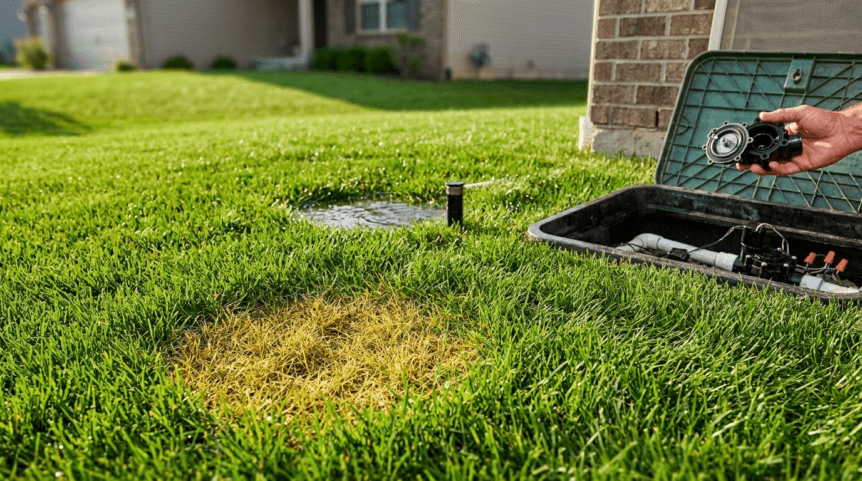
If one zone will not turn off, another will not start, or the valve box stays wet long after the cycle ends, a bad sprinkler valve is a real possibility. The problem is that valve issues can look a lot like controller problems, solenoid failure, broken heads, or even a damaged line.
This guide helps you sort that out. Below, you will find the most common symptoms of a bad sprinkler valve, what each symptom usually points to, how to check the valve before assuming the worst, and when it makes more sense to schedule professional irrigation service.
The quickest signs your sprinkler valve may be the problem
A failing valve usually shows up in one of a few predictable ways. The most common bad sprinkler valve symptoms include:
- One zone keeps running after the controller shuts off: This often points to debris inside the valve, a worn diaphragm, or a solenoid that is not closing properly.
- One zone will not turn on at all: That can mean the valve is stuck closed, but it can also be a solenoid, wiring, or controller issue.
- The valve box is wet or muddy even when the system is off: A leaking valve, damaged seal, or nearby line issue may be involved.
- You hear buzzing or clicking, but the zone does not water correctly: This often suggests the solenoid is getting power but the valve is not opening or closing the way it should.
- Water pressure in one zone is weak or inconsistent: A partially opening valve, internal wear, or debris may be restricting flow.
- You see dry spots and soggy areas in the same zone: That can happen when the valve is not operating cleanly, but it can also point to head or line problems.
- Your water bill climbs without an obvious reason: A valve that seeps or stays slightly open can waste a surprising amount of water over time.
If you want a better sense of how sprinkler valves fit into the system, it helps to start there. But symptoms alone do not tell the full story. The next step is understanding what those symptoms usually mean.
Symptoms that usually point to a shutoff problem
A zone that does not fully shut off is one of the clearest warning signs of valve trouble. You may notice:
- Sprinklers continue to run after the cycle ends
- Heads that stop spraying but still seep
- A valve box that stays wet
- A puddle that keeps coming back in the same spot
- A water bill that creeps up even when watering times have not changed
In many cases, the issue is inside the valve itself. Dirt or sediment can keep the diaphragm from sealing. A worn seal or damaged internal part can let water slip through. A loose or failing solenoid can also prevent the valve from closing cleanly. That said, not every wet spot starts at the valve. A damaged supply line can create similar symptoms, especially if the leak is nearby.
Symptoms that usually point to an opening or response problem
The other major symptom pattern is the opposite: the zone does not come on when it should. That may look like:
- One zone stays completely dry while the others work
- A weak trickle instead of a full spray
- A humming or clicking sound at the valve
- No response when you try to run that zone manually from the controller
This can still be a bad valve, but it is also where controller and solenoid issues become more likely. If the valve is not getting the right signal, or the solenoid cannot respond to that signal, the zone may never open, even if the valve body itself is still in decent shape. That is why controller issues need to stay in the conversation during diagnosis.
What each symptom usually means
A bad sprinkler valve is rarely diagnosed from one clue alone. The better approach is to look at the symptom pattern.
If a zone keeps running or continues to seep after the cycle ends, the valve is usually failing to close completely. That often means debris is trapped on the valve seat, the diaphragm is worn, or the solenoid is not returning to the closed position. In older systems, internal wear is a common reason the problem keeps returning even after a quick cleanup.
If a zone does not turn on, opens only halfway, or makes noise without delivering proper flow, the problem may be electrical, mechanical, or both. A bad solenoid, damaged common wire, weak connection, or controller problem can stop the valve from opening. A stuck diaphragm or internal obstruction can create the same result, even when power is present.
Pressure swings, uneven spray, and isolated dry spots are less definitive. They can happen with a failing valve, but they can also come from broken heads, line damage, root intrusion, poor coverage, or worn components elsewhere in the zone. That is one reason sprinkler diagnosis should not stop at the first obvious symptom. On real properties, problems often stack up. You may find examples of that in common irrigation repair situations, where damage from roots, animals, frost, storms, and aging parts can mimic one another.
How to check a sprinkler valve before you assume it is bad
Before you replace anything, do a few basic checks. The goal is not to turn every homeowner into a technician. It is to narrow the problem and avoid replacing the wrong part.
- Open the valve box and look for obvious clues: Start with the simplest check. If the box is full of water, packed with mud, or shows obvious cracks, loose fittings, or worn parts, you already have useful information. A valve that is visibly damaged is a different situation from one that simply is not responding.
- Run the zone manually at the controller: Try activating the problem zone by itself. If nothing happens, compare it to a working zone. If the working zone activates normally and the problem zone does not, you have confirmed that the issue is isolated. That narrows the diagnosis.
- Try the valve’s manual operation point: Many irrigation valves allow manual opening at the valve. If the zone runs manually but not from the controller, the controller, wiring, or solenoid becomes more likely. If it still does not run properly, the valve body or flow path may be the real issue.
- Look for debris-related problems: Valves live underground. Dirt, grit, insects, and mineral buildup are common. If the system has had recent repairs, line breaks, or work near the manifold, debris inside the valve becomes even more likely. Minor obstruction can keep a valve from opening or sealing the way it should.
- Check whether the controller is actually sending power: If you are comfortable with electrical testing, a multimeter can help confirm whether the controller is sending the expected low-voltage signal to that station. If the controller is sending power but the valve does not respond, the solenoid or valve assembly becomes more suspect. If there is no proper signal reaching the valve, the problem may be in the controller or wiring instead.
Start with the valve box, visible leaks, and manual operation
Always begin with what you can actually see. A cracked valve body, persistent seepage, muddy box, or loose solenoid gives you better clues than guesswork from the surface. If the valve has a manual bleed or manual-open feature, use it to see whether the zone responds mechanically.
That quick check can tell you a lot. If the valve opens manually but not from the controller, the issue leans electrical. If it still will not operate correctly by hand, internal valve wear or blockage becomes more likely. If you need a refresher on the basic role of the valve in each zone, start with valve component basics.
Then check whether the controller is actually sending power
A lot of bad valve calls turn out to be controller or wiring issues. If the station is programmed correctly but the zone still will not respond, it helps to check whether the controller is actually sending the signal to that valve.
If the controller output is normal, but the valve does not react, the solenoid or valve internals move higher on the suspect list. If the output is missing or inconsistent, you may be dealing with a timer issue, damaged wire, corroded connection, or a bad station terminal.
Bad valve or bad solenoid? Here is the difference
This is where many articles stay too vague. The solenoid is part of the valve assembly, but it is not the same thing as the whole valve.
A bad solenoid usually shows up as an electrical response problem. The controller calls for the zone, but the valve hums, clicks, or does nothing. Sometimes the zone works intermittently. Sometimes it works manually at the valve, but not from the timer. That pattern suggests the signal path or the solenoid itself deserves closer attention.
A bad valve body or diaphragm usually shows up as a mechanical water-control problem. The zone may stay partially open, continue seeping after shutdown, or fail to regulate flow correctly even when the electrical side seems normal. In that case, the issue is often inside the valve: worn rubber, trapped debris, internal damage, or age-related failure.
Clues that the solenoid or wiring is the bigger problem
The solenoid or wiring becomes more likely when:
- The valve hums or clicks but does not open properly
- The zone runs manually at the valve, but not from the controller
- The problem is intermittent rather than constant
- Other symptoms suggest poor electrical contact or damaged station wiring
Clues that the valve body, diaphragm, or seat is the bigger problem
The valve body or diaphragm becomes more likely when:
- The zone keeps seeping after shutdown
- The valve seems stuck partly open or fully open
- Cleaning the area does not stop the recurring issue
- The valve is older and showing repeated internal problems
If your symptoms line up more with mechanical wear than signal failure, that points more toward valve repair than controller diagnosis.
Should you clean it, rebuild it, or replace it?
Not every bad symptom means you need a whole new valve. In some cases, a simple cleanup or part replacement is enough. In others, replacement is the smarter long-term choice.
When cleaning or a minor repair is usually enough
If the problem started suddenly and the valve body is still in good shape, debris may be the real cause. Dirt on the diaphragm seat, minor internal buildup, or a replaceable solenoid can often be corrected without replacing the whole assembly. This is more common when the system has recently had a repair, a line break, or seasonal startup issues.
When full valve replacement makes more sense
Replacement makes more sense when the valve body is cracked, corrosion is severe, parts are worn throughout, or the same valve keeps failing after previous repairs. Age matters too. If the system is older and the valve has become a recurring problem, replacing it can be more cost-effective than repeated small fixes. The same goes for damage tied to frost, root pressure, storm events, or long-term wear visible in real common irrigation repairs.
If you are already weighing parts against labor, this is usually the point where a professional irrigation repair service becomes the more reliable route.
When it is time to book sprinkler repair
Some valve problems are worth checking yourself. Others are better handled by a technician from the start.
It is time to book a repair when:
- The zone will not shut off, and you need the system under control quickly
- The box stays wet, and you cannot tell whether the leak is at the valve or the line
- The valve hums, clicks, or behaves inconsistently after basic checks
- The problem may involve buried wiring, damaged connections, or multiple components
- The system has visible age, freeze damage, root intrusion, or repeated failures
- You want the actual cause diagnosed before spending money on the wrong part
At that point, it makes more sense to contact Irrigation Tech than keep guessing underground.
Need help with a bad sprinkler valve? Irrigation Tech can diagnose it and fix it
A bad sprinkler valve does not always stay a valve problem. Sometimes the issue is the solenoid. Sometimes it is the controller. Sometimes the symptom starts at the valve box but leads back to a damaged line or a larger repair. That is why accurate diagnosis matters. Irrigation Tech provides troubleshooting, repair, and upgrade support for irrigation systems across the full system, not just the visible symptom