
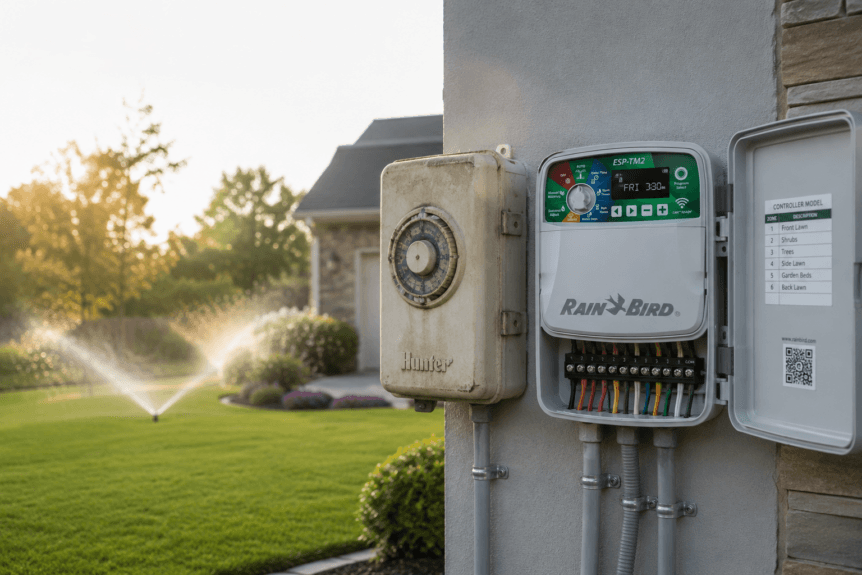
A sprinkler controller’s lifespan depends on which part is actually wearing out, the housing or the electronics inside it, and that’s the reason estimates online swing anywhere from five years to twenty. A controller’s plastic casing can outlast the system around it if it’s never exposed to moisture or a power surge. The internal electronics usually fail first, especially in an older electromechanical timer that was never built to hold its program through an outage. Most homeowners replacing one today move up to WiFi-enabled controllers, which solve that exact problem.
Signs Your Controller Is Failing
Solid-state irrigation electronics rarely give advance warning before dying completely, but a few specific operational red flags will tell you exactly when the command panel itself is failing. If you are auditing your system before calling for service, check the wall unit for these specific diagnostic symptoms:
- Unresponsive physical interface hardware or distorted displays. When terminal programming buttons fail to register inputs or the liquid crystal display (LCD) begins dropping entire columns of vertical pixels, the internal ribbon cables or processing circuit boards are actively degrading.
- Repetitive memory loss after standard environmental disruptions. If your controller completely drops its designated program, loses the current time, or defaults to factory settings after a minor seasonal rainstorm, the backup capacitor on the motherboard has failed. Modern solid-state modules should hold memory easily through localized voltage dips.
- Frequent manual clock resets on vintage gear-driven timers. Having to manually fix your watering schedule after every minor electrical grid flicker on an older electromechanical clock doesn’t mean the unit is broken. These legacy gear systems simply lack non-volatile memory chips, which is an inherent design limitation that makes them prime candidates for modern upgrades.
- Widespread system shutdowns affecting every single watering zone. When multiple irrigation zones fail to fire simultaneously, the technical issue usually points to a severed common field wire or a submerged valve box in the yard rather than a software failure inside the control panel.
Should You Repair or Replace It?
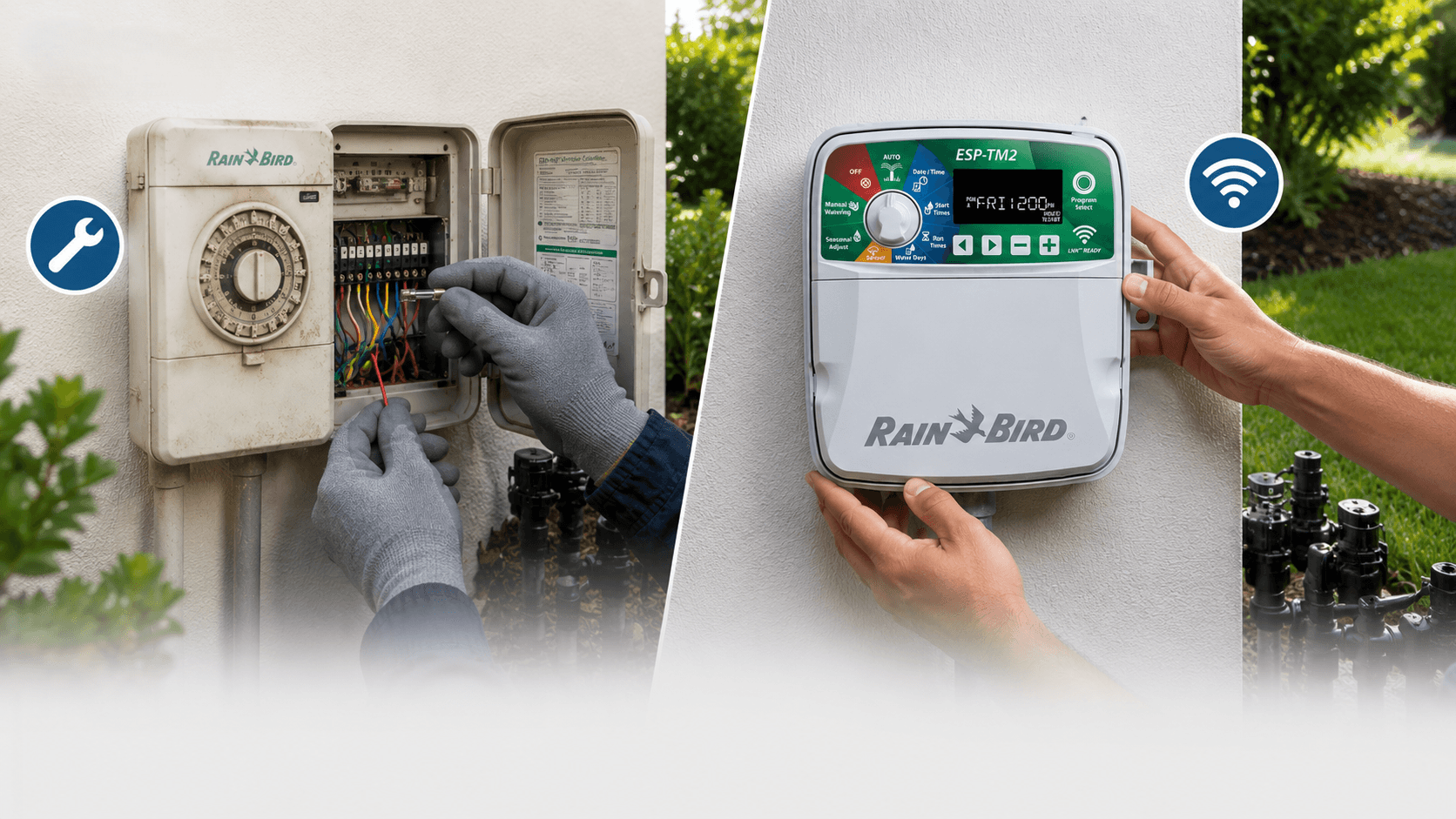
The math here is simpler than it feels in the moment. If a repair costs more than roughly half of what a new controller would run, replacing it is usually the better deal. That threshold holds up because a unit old enough to need major internal work is also old enough to need something else within a year or two. A blown fuse or one bad wire is a cheap, worthwhile fix. A controller that’s needed more than one sprinkler repair call in a single season has usually crossed that line already, even if no individual visit felt expensive on its own.
What Does It Cost to Repair or Replace a Controller in Upstate New York?
Buying a basic digital timer off the shelf usually costs between $30 and $150, depending on how many zones your property runs. That baseline hardware price doesn’t cover the true cost of restoring an aging irrigation setup. Clocks rarely die in absolute isolation. If your controller gave out after a decade of service, the field solenoids, rain sensors, and underground connectors are likely nearing the end of their functional lifespans too. We often find that a dead wall box is just the first visible warning sign of widespread wiring dry rot underground. When a system reaches this stage, factoring in long-term system replacement costs is a much smarter financial move than paying for endless diagnostic call-outs.
Is Upgrading to a Smart Controller Worth It?
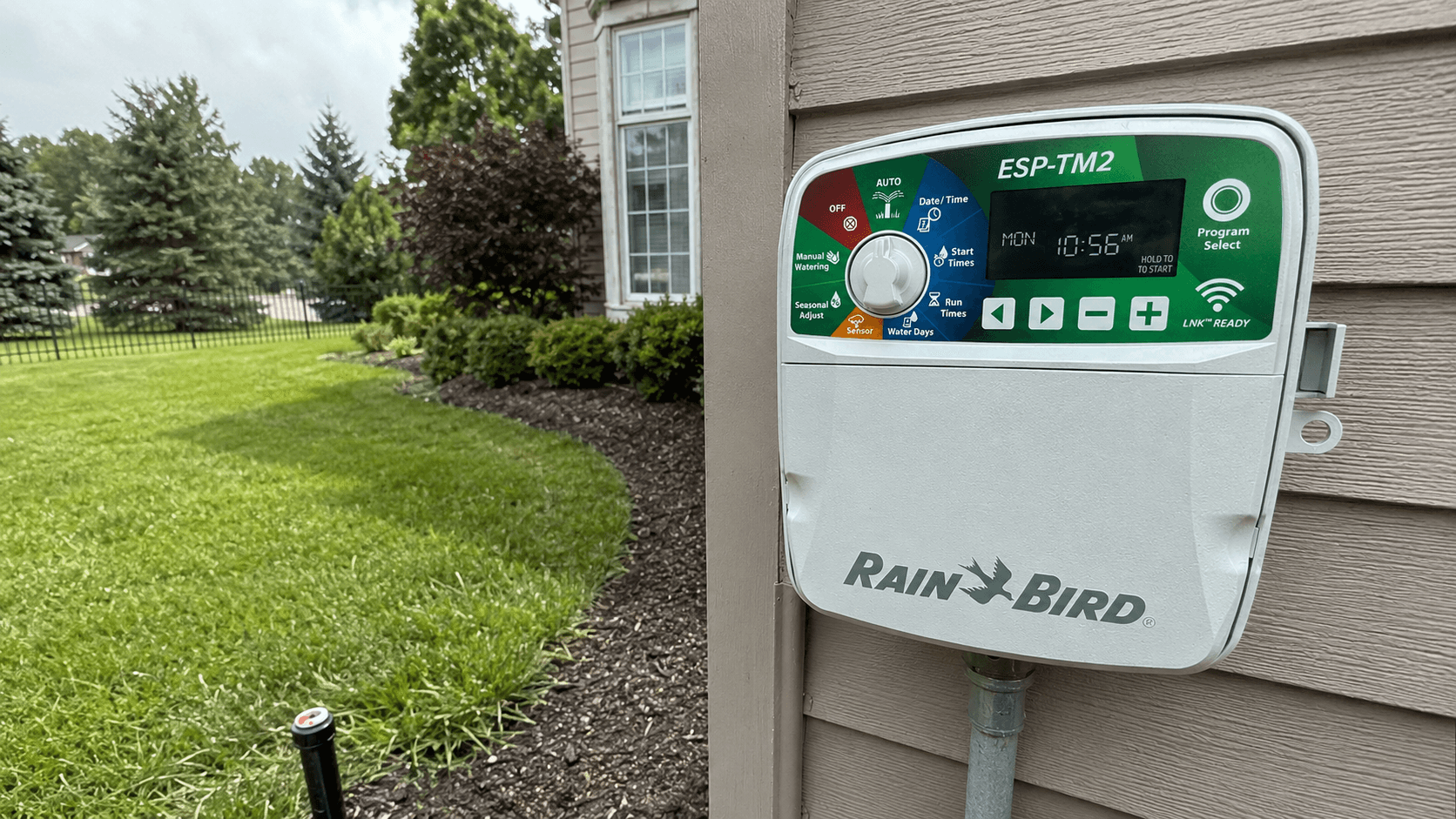
For most homeowners, yes, mainly because of what it skips rather than what it adds. A smart controller pulls local weather data and skips a cycle during a rainy stretch that a fixed schedule would have run anyway. We install Rain Bird and Hunter Hydrawise controllers for exactly this reason, since both adjust automatically instead of waiting on someone to remember to change the schedule by hand each season.
Anyone unsure whether their current unit is an older electromechanical type or a newer ESP controller can usually tell by whether it holds time and date through a brief power blip. If it doesn’t, that’s the same electronics issue showing up again.
Inherited an Old Controller With No Manual? Start Here.
Inheriting an old sprinkler system when you buy a house is incredibly common. Do not waste time trying to guess the model from the faded logo on the outside cover. Pop the front panel open and check the frame of the internal wiring bay. Manufacturers usually stamp the exact model number and wiring schematic directly onto the plastic chassis so it cannot get lost.
If the stamps are unreadable or the system is completely obsolete, do not start moving wires around on a guess. Cross-wiring an unmapped terminal can instantly fry the zone solenoids out in your yard. Save yourself the headache and book an irrigation system inspection instead. We can map out the lines and tell you exactly what you have before you buy parts that will not fit.
Remember, a dead wall box does not mean your whole system is ruined. Circuit boards simply wear out after ten or fifteen years. Replacing a controller is just standard maintenance, not a total system failure.
Common Controller Troubleshooting Questions
How long should a sprinkler controller really last?
Long enough that most homeowners end up replacing one because of outdated features or failing electronics, not because the case wore out. Five to ten years is realistic for the internal electronics in regular use. The housing itself can last considerably longer if it’s never been exposed to moisture or a surge.
Is it cheaper to repair or replace a sprinkler controller?
Repair almost always wins for a single bad part, like a fuse or one damaged wire. Once the needed repair starts approaching half the cost of a new unit, replacing it stops being a close call and becomes the more practical choice.
Will a smart controller actually lower my water bill?
Usually, mostly by skipping cycles a fixed schedule would have run during rain or a cool stretch. The savings tend to be bigger for a system that’s currently overwatering than for one that’s already well-tuned to the property.
What if I don’t even know what kind of controller I have?
Open the panel and look for a brand or model number printed inside rather than guessing from the outside. If nothing turns up, it’s faster and safer to have someone take a look than to start testing wires on a guess.