
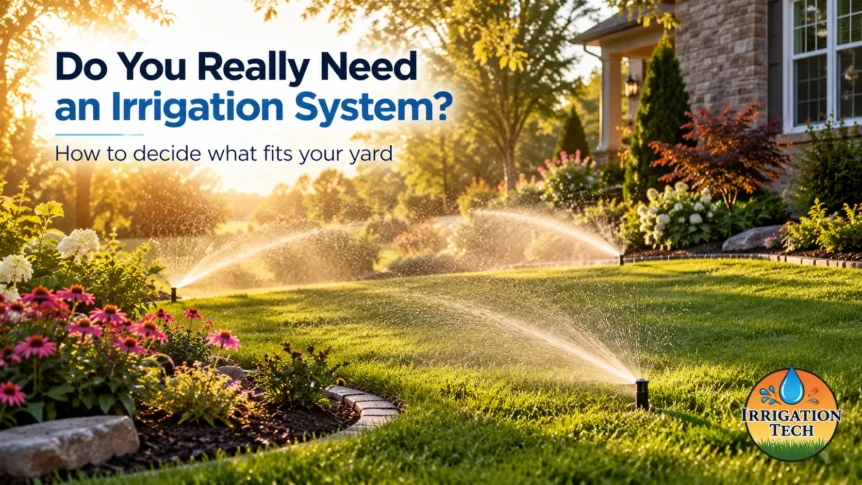
Many homeowners keep a healthy yard with a hose and sprinkler, so installing an irrigation system is a choice, not a requirement. The decision comes down to the time watering takes, how much of the yard needs attention, and whether you can keep up during hot, dry stretches. A system may be useful when hand watering becomes a chore or parts of the lawn and garden are often missed. For a small yard that is easy to reach, a hose may remain the simpler option.
When Hand Watering May Be Enough
Hand watering can work well when your lawn and plants are easy to reach, and the routine fits your schedule. You can focus on individual plants, move the hose where it is needed, and stop once the soil has had enough water.
A portable sprinkler or hose timer can make the job easier without installing a permanent system. You may still need to reposition the sprinkler, but for a compact yard that extra step may be manageable.
When an Irrigation System Could Make Yard Care Easier
The clearest reason to consider an irrigation system is a recurring watering problem. You might want one when:
- Watering the lawn and beds takes more time than you can regularly set aside.
- Some areas are hard to reach, so they are often skipped or watered unevenly.
- Work, family commitments, or limited mobility make it difficult to keep a regular routine.
- You travel during the growing season and have trouble arranging dependable watering.
- New plantings need regular attention, but watering them by hand is easy to put off.
These are practical signs, not rules. If you can water everything comfortably and consistently, an automatic system may not add enough value for your situation.
What Happens When Watering Falls Behind?
When a yard does not get enough water, flowers and other plants may wilt, and new lawn or plantings can struggle to establish. Uneven coverage can leave dry patches beside areas that receive plenty of water. Replacing plants or reseeding later may also mean extra work and watering.
Brown grass alone does not prove that a lawn has died. Established grass can go dormant in dry weather, and shade, disease or other lawn problems can also affect its appearance. Check the soil and the affected area before deciding that more watering is the answer.
What an Irrigation System Changes
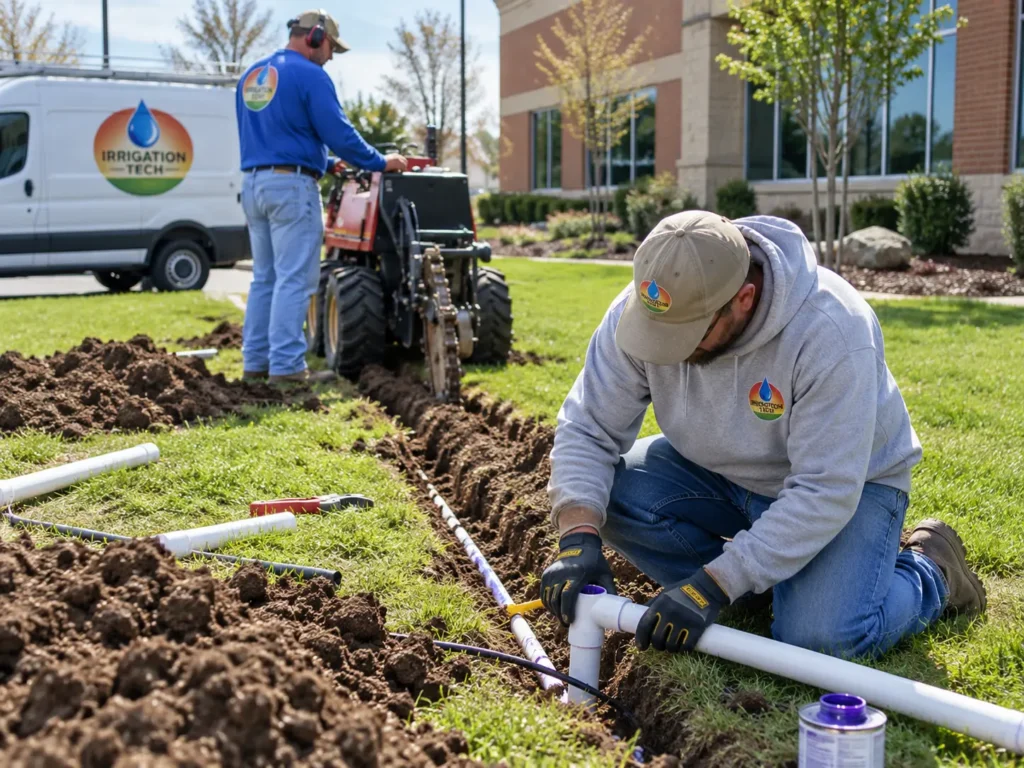
An automatic system can reduce the need to move hoses and sprinklers from one part of the yard to another. A planned layout can serve separate lawn and planting areas, with watering adjusted to suit each area. That makes it easier to keep a routine when your schedule is busy or you are away.
Automation does not mean “set it once and forget it.” Watering settings need to reflect rainfall, seasonal conditions, and the needs of the landscape. Sprinkler heads and lines also need occasional checks for leaks, blockages, or poor coverage. A system is most useful when its layout and schedule match the property.
How to Decide What Fits Your Yard
Start with the problem you want to solve. Note which areas need water, how long the current routine takes, and what tends to get missed. If the work is manageable and the yard is getting the care it needs, keep your current setup. If watering repeatedly falls behind, a system may save effort and make coverage easier to manage.
You do not have to irrigate every part of the property. Some homeowners may only need coverage for selected lawn areas or planting beds. The right scope depends on the yard, the water supply, and your budget.
Discussing an Irrigation System with Irrigation Tech
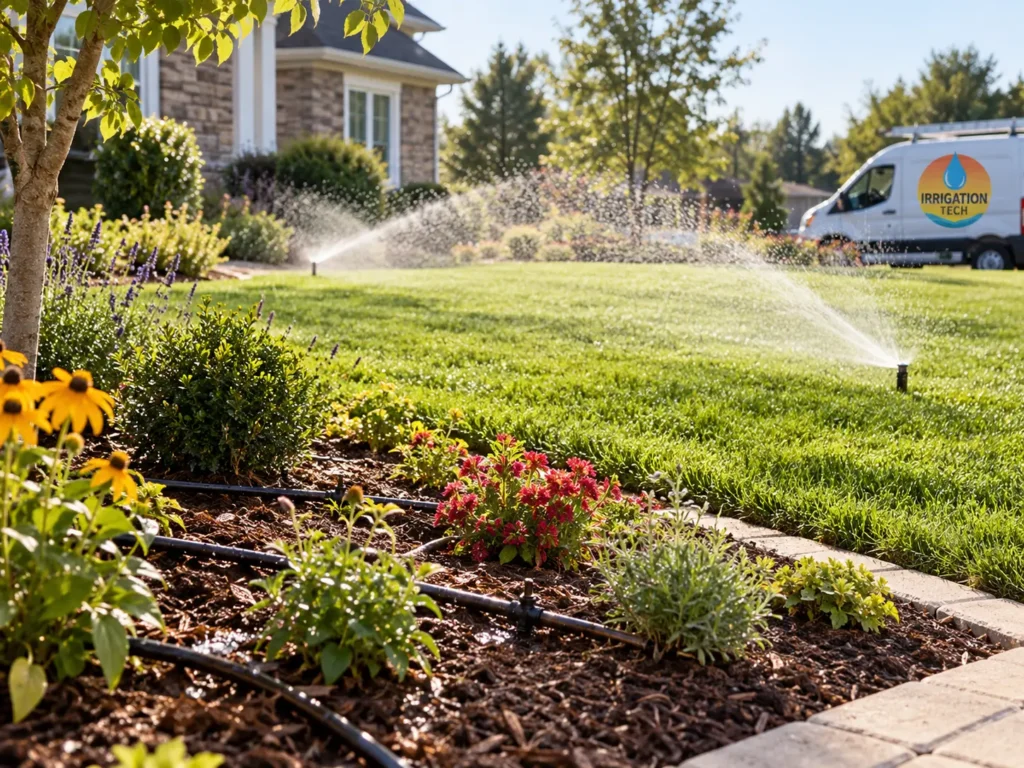
If you are weighing the options, Irrigation Tech can discuss the areas you want watered and the project requirements for your property. The company designs and installs lawn sprinkler systems and planting-area drip and spray systems, with proposed work reviewed with you and adjusted for your budget and priorities.