
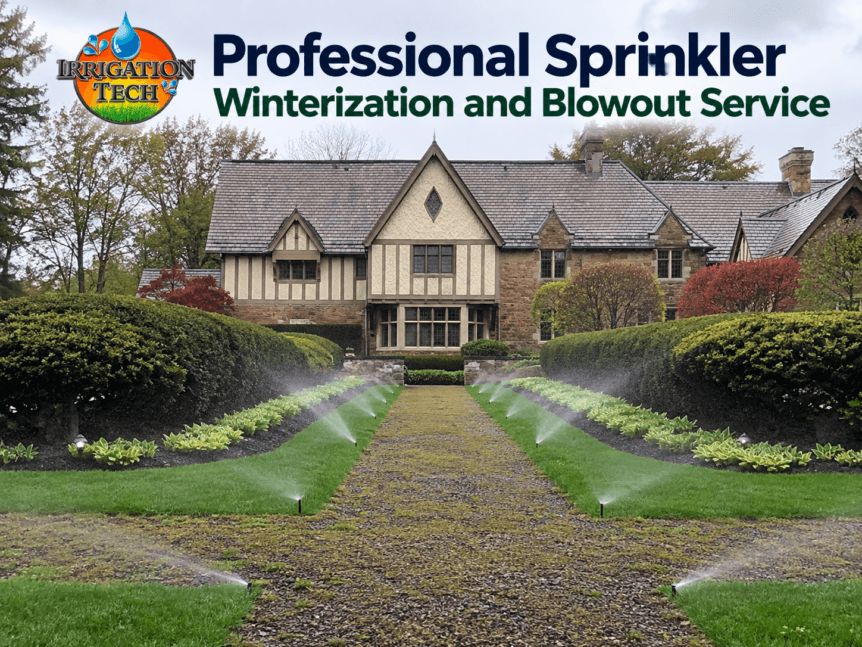
Cold weather is closing in, and water still sitting in your sprinkler lines won’t survive a hard freeze quietly. It cracks valves, splits lines, and damages heads, and none of it shows up until spring, when it’s a repair bill instead of something that could’ve been prevented. We clear every zone on your property before the ground freezes, so your system makes it through winter in one piece.
Common Problems When This Service Is Skipped
Winter doesn’t ease in gently in Rochester, and a system still holding water when that first freeze hits doesn’t get a warning first. Here’s what actually happens when winterization gets skipped or done halfway:
- Frozen Pipes: Water left in the lines freezes and expands, cracking valves and splitting supply lines.
- False Shutoff : Turning the system off at the controller stops watering, but the water already in the pipes stays exactly where it is.
- Missed Spots: Built-in drain valves rarely clear everything. Low points and flat pipe stretches trap water behind.
- Early Cold Snap: The first hard freeze doesn’t always wait until late October. Some years it comes early.
- Silent Damage: None of this shows up until spring. A cracked valve just sits frozen and hidden all winter.
How We Fix It
Winterizing a system isn’t one action; it’s a sequence, and skipping or rushing any step in it is how water gets left behind. Here’s exactly what we do and why each part of it matters:
1. We shut off the water supply first.
Before anything else, we cut the water at the source so nothing new can enter the lines while we work. This step alone doesn’t protect your system, but skipping it means fighting incoming water the whole time.
2. We connect a portable compressor and pneumatic hoses.
This is what separates a real winterization from a passive drain valve. Compressed air reaches water that gravity never would, pushing it out instead of hoping it finds its own way.
3. We blow out each zone in sequence.
We work zone by zone, lawn spray areas and planting area drip lines alike, at a pressure calibrated to clear the water without stressing the pipes, valves, or heads. Too much pressure damages components. Too little leaves water sitting behind.
4. We keep working a zone until only air comes out.
This is the step that actually determines whether a system is protected. A technician running a compressor through your system isn’t the same as clearing it completely. We don’t move to the next zone until the current one is dry.
5. We back it with a freeze guarantee.
If we winterize your system and it freezes anyway, that’s on us to fix, not you.
The payoff isn’t just an avoided repair bill. It’s a system that starts up clean at Start-Up in spring, with no surprises waiting once the water comes back on.
Services We Provide
You shouldn’t have to figure out what your specific setup needs before you call. Whether it’s a straightforward lawn-only system or a property with drip lines, backflow requirements, and a few things that need fixing along the way, it all gets handled in one visit, by the same crew, without you juggling separate appointments.
- Full System Blowout : We clear every zone on your property with a portable compressor, lawn spray areas and drip lines included, so nothing gets left behind to freeze.
- Backflow Testing : Since we’re NYS-certified backflow testers, we can test, install, or repair your backflow prevention device in the same visit, so you’re not stuck scheduling a plumber separately before the season closes out.
- Drip Line & Planting Bed Winterization : Flower beds and planting areas run on drip systems, and those lines are just as vulnerable to freeze damage as your lawn zones. We clear them the same way.
- On-the-Spot Repairs :If we find minor damage during the blowout, like a cracked head or a loose fitting, we fix it right there instead of scheduling a second visit.
- Freeze Guarantee : Every winterization comes with our guarantee that the system won’t freeze. If it does, we make it right.
Why Choose Us for This Service
We’ve been winterizing systems since 1985, and irrigation is the only thing we do. We’re not a landscaping company that handles sprinklers on the side. Every technician on a winterization crew works irrigation systems year-round, so a blowout isn’t something attempted once a season and hoped for.
We were named to the Irrigation Association’s Top 100 U.S. Contractor list twice, the only company in Western New York to do that. None of that shows up on a sprinkler head. It shows up in how the job gets done.
Schedule Your Service Before Facing Issues
Systems winterized properly in the fall have far fewer surprises come spring than ones that were only shut off at the timer. Call 1-877-8-IRRIGATE or schedule online before the fall rush fills up the calendar.
Irrigation Tech
141 Sully’s Trail, Suite 11, Pittsford, NY 14534
Phone: (585) 225-0380
Email: info@irrigationtech.com
Can I winterize my own sprinkler system?
Technically, yes, if you own a large enough air compressor. In practice, most homeowner-grade compressors can’t move enough air fast enough to fully clear a system, and too much pressure can crack pipes or blow sprinkler heads off entirely. That’s why this is a job most people hire out rather than attempt with a rented compressor.
My system has an automatic drain valve. Do I still need a professional winterization?
Automatic and manual drain valves are supposed to handle winter prep on their own, but in practice they rarely clear a system completely. Water still settles in low points, inside valve bodies, and in any pipe stretch that doesn’t slope toward a drain, which is exactly where freeze damage tends to start.
What if my sprinkler system already froze before I could winterize it?
Don’t run the system or try to force water through it. Have a technician inspect it before you turn anything on, since a frozen line that’s already cracked can cause real damage the moment pressure hits it again.
How cold does it need to get before my sprinklers are actually at risk?
Sustained temperatures at or below freezing are what put water inside your lines at risk, not a single cold night. That’s why winterizing before the first hard freeze, rather than waiting for a stretch of freezing weather, matters.
What’s the difference between a Mid-Season Check-Up and winterization?
A Mid-Season Check-Up happens during the growing season, generally June through September and adjusts your system for watering accuracy. Winterization happens in the fall, generally mid-September through mid-December, and removes all the water from your system so it survives winter.