
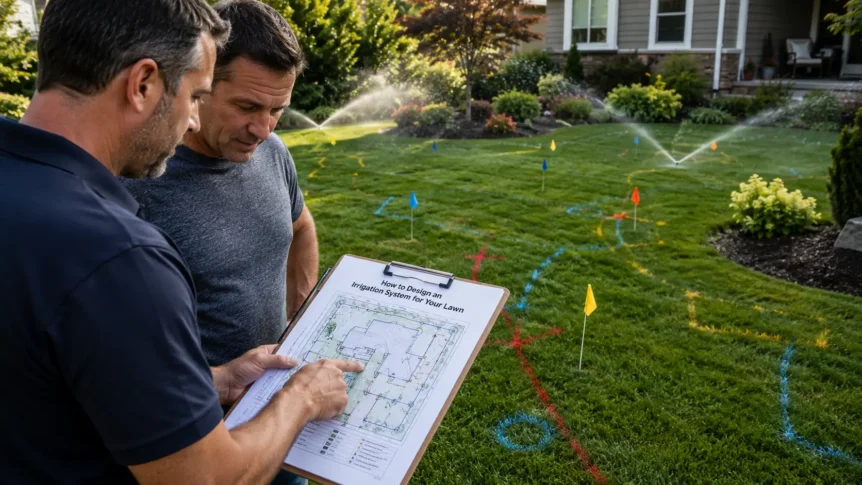
A lawn irrigation system looks simple from the outside and a few sprinkler heads popping up out of the grass, a timer in the garage, done. But the systems that actually work well, the ones that leave you with even, green coverage instead of soggy patches next to brown, crispy corners, are the ones that were planned properly before a single pipe went into the ground. Good coverage isn’t luck. It’s math, water pressure and a layout that accounts for the actual shape of your yard.
If you’re planning a new system or trying to understand why your current one leaves dry spots no matter how long you run it, this guide walks through the core factors that go into a solid irrigation design.
What is an irrigation system, exactly?
At its most basic, an irrigation system is a network of underground pipes, valves, and sprinkler heads connected to a water source and controlled by a timer, designed to water your lawn and landscaping automatically on a set schedule. Instead of dragging a hose around the yard, the system delivers water directly where it’s needed, in the amount it’s needed, without you having to think about it.
A well-designed system is broken into separate watering zones, each one controlled independently so that areas with different sun exposure, soil type, or plant needs can be watered differently. That’s really the heart of good design: matching water delivery to what each part of your lawn actually requires.
Lawn’s size and shape
Before you think about sprinkler heads or pipe routing, you need an accurate map of your property. Measure the lawn’s total square footage and sketch out its shape, including any curves, narrow strips, slopes, or obstacles like trees, flower beds, or a patio.
Irregularly shaped yards are where most amateur designs go wrong. A long, narrow side yard needs a completely different sprinkler layout than a wide, open backyard and trying to use the same spacing and head type across both usually leaves you with dry corners or overlapping waste. Take the time to map it out on paper first and then it’s far easier to fix a layout mistake on paper than after the trenching is done.
Water pressure and flow rate
This is the step most homeowners skip and it’s the one that causes the most problems later. Every sprinkler head is rated for a specific pressure range (measured in PSI) and flow rate (measured in gallons per minute). If your pressure comes in low, a pressure boosting solution can bring a weak zone back up to a workable range, rather than forcing you to run fewer heads than the lawn actually needs. Too high and you’ll get misting instead of a clean spray, which wastes water and leaves uneven coverage.
Before finalizing your design, test your home’s static water pressure and available flow rate. This determines two important things:
- Which type of sprinkler heads will actually work well on your property
- How many zones you’ll need, since running too many heads on a single zone will drop the pressure below what each head needs to perform properly
A basic pressure and flow test is inexpensive and saves you from designing a system that looks right on paper but underperforms once it’s installed.
Choosing the best sprinkler for your lawn
Not all sprinkler heads are built the same and picking the right type for each area is one of the biggest factors in even coverage.
- Spray heads are best for smaller areas, narrow strips and flower beds. They cover a fixed pattern (full circle, half circle, or quarter circle) and apply water quickly, which is why they’re paired with shorter run times.
- Rotor heads are better suited for larger, open lawn areas. They apply water more slowly across a wider radius, which means they need longer run times but distribute water more evenly over big spaces.
- Drip irrigation works well for garden beds and shrubs, delivering water directly to the root zone with very little waste, though it’s not practical for open turf.
Mixing spray and rotor heads on the same zone is one of the most common design mistakes we run into. Since spray heads apply water much faster than rotors, combining them on one zone means one type finishes watering long before the other, leaving you with either overwatered or underwatered sections depending on how the zone is timed.
Planning sprinkler placement and spacing
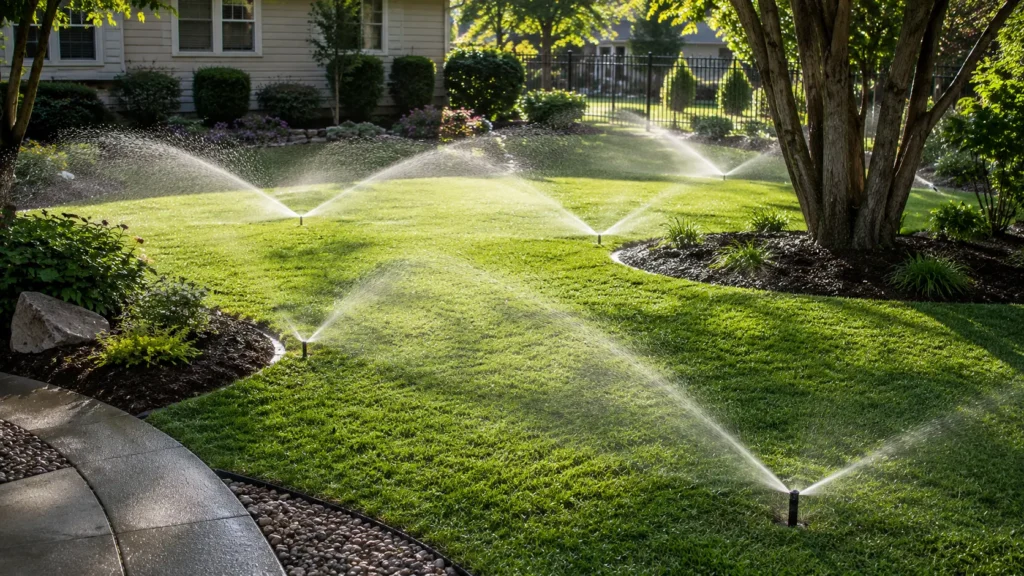
Even coverage comes down to one core design principle: head-to-head spacing. This means each sprinkler’s spray pattern should reach the head next to it, so the coverage areas overlap slightly rather than leaving gaps between them.
Skimping on the number of heads to save money is one of the most common causes of dry patches. If sprinklers are spaced too far apart, the areas between them simply won’t get enough water, no matter how long the system runs. On the flip side, placing heads too close together wastes water and can lead to soggy, oversaturated turf.
When planning placement, also account for:
- Obstacles like trees, mailboxes, or garden structures that can block spray patterns
- Slopes, which may need shorter, more frequent run times to prevent runoff before the water has a chance to absorb
- Hardscaping, like driveways and sidewalks, where overspray wastes water and can create slippery surfaces
Designing your watering zones
Zones exist because your lawn isn’t uniform, even if it looks that way at a glance. Areas with full sun need more water than shaded areas. Slopes drain differently than flat ground. A strip of grass next to the driveway heats up more than a shaded corner behind the garage.
A good irrigation system installation groups sprinkler heads into zones based on:
- Sun exposure (full sun vs. shaded areas)
- Sprinkler head type (never mix sprays and rotors on the same zone)
- Water pressure and flow rate limits, so each zone gets enough pressure to run all its heads properly
- Plant type, since lawn, shrubs and flower beds typically have different watering needs
Poorly planned zones are one of the more expensive mistakes to fix after installation, since correcting them often means digging up existing pipes. It’s worth spending extra time getting the zone layout right before anything goes into the ground.
Residential vs. commercial irrigation system design
The same core principles apply whether you’re designing for a quarter-acre lawn or a much larger property, but a commercial irrigation system design typically involves more zones, higher water demand and often a backflow prevention device required by local code. Commercial properties also tend to have more varied landscaping; turf, ornamental beds, trees which usually means more zones to keep water delivery matched to each area’s specific needs. If you’re designing for a commercial space, it’s worth having a professional review your pressure and flow calculations before installation, since the margin for error shrinks as the system grows.
How to install an irrigation system?
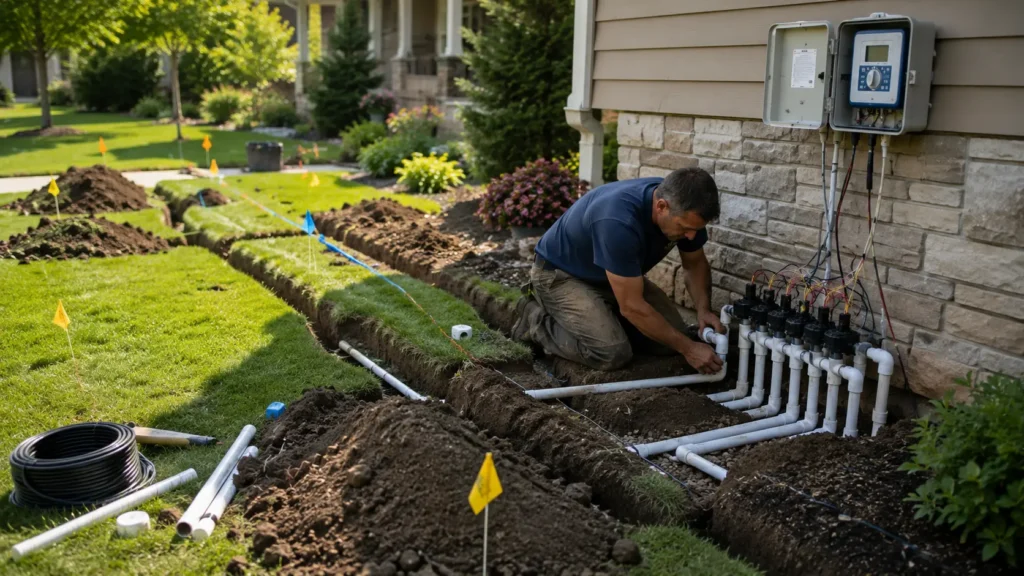
Once your design is finalized, installation generally follows this sequence:
- Mark utility lines before any digging begins
- Install the backflow prevention device, connecting the system to your water supply
- Trench the pipe routes according to your zone layout
- Lay pipe and connect valves, one per zone
- Install sprinkler heads at each planned location, adjusting height so they sit flush with the lawn
- Connect the controller and wiring to each zone valve
- Test each zone individually, checking coverage, pressure and spray patterns before backfilling trenches
Testing before backfilling is a step that’s tempting to skip, but it’s much easier to adjust a head’s position or fix a pressure issue while the trench is still open than after everything is buried.
Common irrigation design mistakes
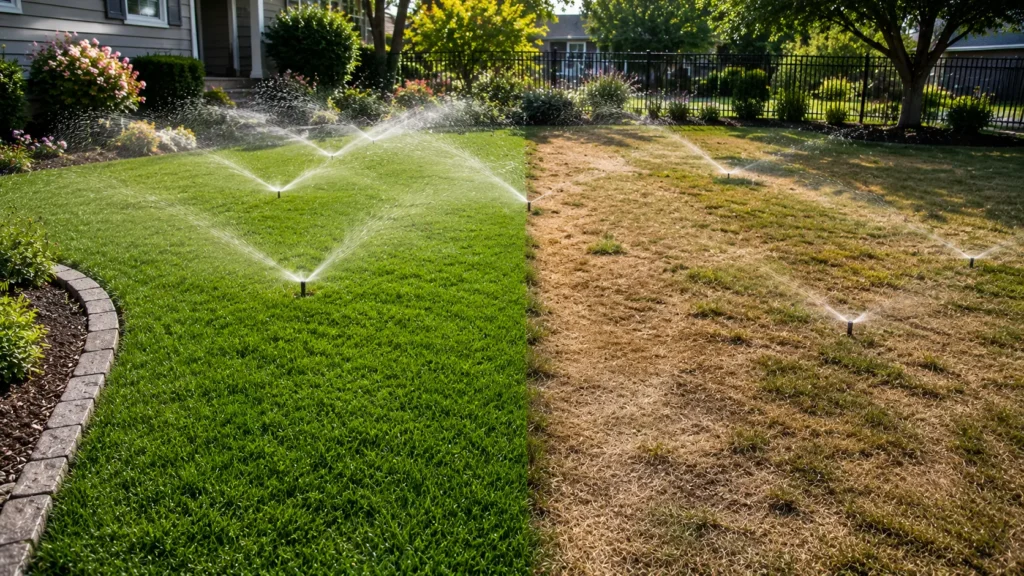
Most of the irrigation problems homeowners in the Finger Lakes Region call about trace back to one of these design mistakes:
- Poor sprinkler placement, leading to gaps in coverage
- Mixing spray and rotor heads on the same zone, causing uneven watering
- Incorrect spacing, either too far apart (dry spots) or too close together (waste and runoff)
- Ignoring water pressure limits, resulting in weak spray patterns or misting
- Poorly planned zones that don’t account for sun exposure, slope, or plant type
- Skipping a pressure and flow test before finalizing the design.A soil moisture sensor built into the design from the start can catch this before it turns into a runoff problem.
Some of these mistakes matter more for a backyard than they do for a five-acre commercial site, which is where the scale of the design starts to change.
When to need a professional?
A simple, small residential lawn can sometimes be designed and installed by a motivated homeowner with the right research. But for larger properties, uneven terrain, or any commercial project, the calculations around pressure, flow and zoning get complex quickly and a mistake in the design phase is far more expensive to correct once pipe is in the ground. If you’re not confident in your pressure test results or zone layout, it’s worth having a professional take a look before installation begins.
FAQ
How many sprinkler zones does my lawn need?
It depends on your lawn’s size, water pressure, and layout, but most residential properties need anywhere from a few zones for a small yard up to eight or more for larger properties with varied sun exposure and landscaping.
Can I mix spray heads and rotor heads in my design?
Not in the same zone. They apply water at different rates, so combining them leads to uneven watering. Keep spray heads and rotor heads in separate zones.
What’s the ideal water pressure for a sprinkler system?
Most residential sprinkler heads perform best between 30 and 50 PSI, though this varies by head type. A pressure test before designing your system will tell you exactly what you’re working with.
Do I need a permit to install an irrigation system?
Requirements vary by municipality, and many areas require a backflow prevention device to be installed and inspected. It’s worth checking with your local building department before starting installation.
How do I fix dry patches in my existing lawn?
Dry patches are usually a sign of incorrect spacing or blocked spray patterns. Walk your zones during a test run to check whether heads are overlapping properly and nothing is obstructing the spray.