

Once the sprinkler lines are cleared for winter, a technician can’t see why the flower bed stayed dry by watching the sprinklers run. A pre-freeze sprinkler inspection gives you a chance to show where the water actually lands. When you book winterization, mention any head that stayed low or any patch of lawn that stayed wet between cycles.
What a technician can see before shutdown
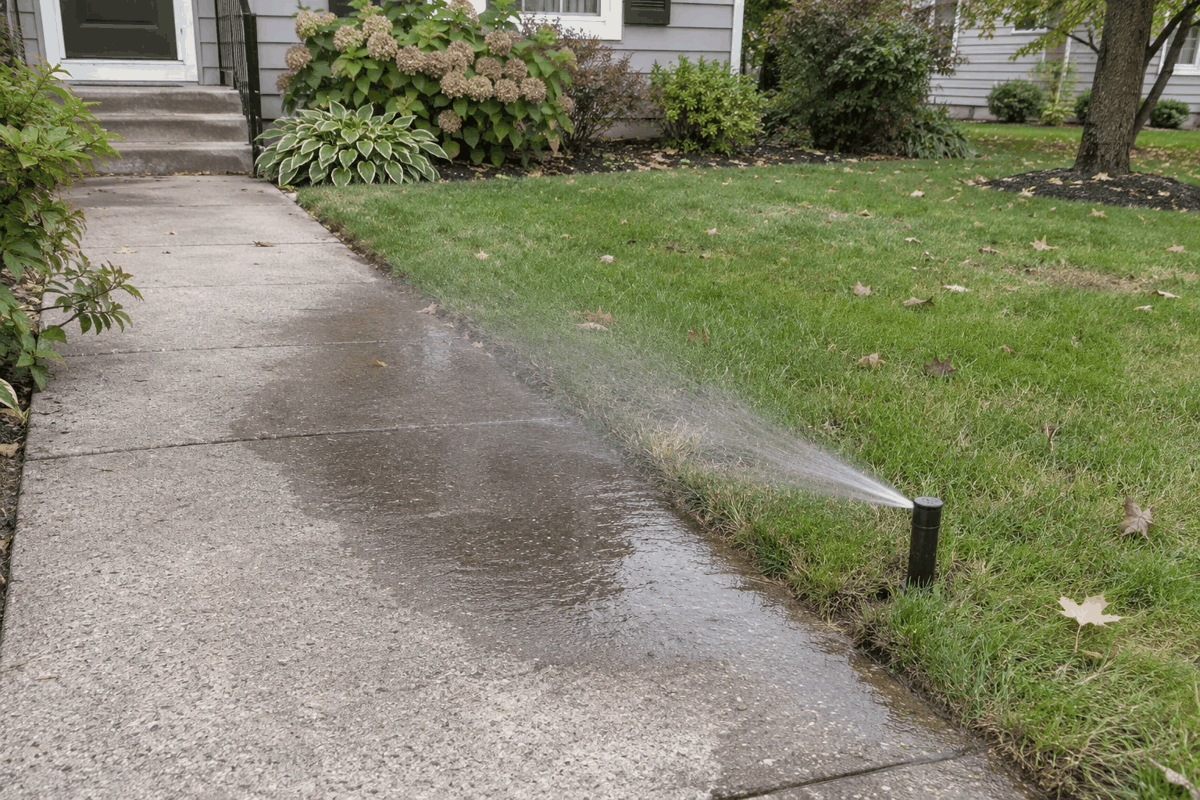
During an irrigation system inspection, the technician can compare heads that run together in the same zone. If one sprays the sidewalk while the others reach the lawn, its position and spray pattern are worth a closer look. If several heads barely rise, the technician has a reason to check how the whole zone is performing before recommending a replacement.
Winterization serves a different purpose. It clears water from the system before freezing weather. A blowout alone won’t show where the spray landed during summer watering. If a freeze is forecast before your appointment, call the service team promptly. Don’t delay winterization to recreate the problem.
Sprinkler problems worth pointing out before winter
Start with a location you could point to from the driveway. A dry strip along the front walk tells a technician more than a report of poor coverage across the yard. Add what you remember about the timing. Ground that stayed wet between watering days warrants a different check from a puddle that appeared after heavy rain.
| What you’ve noticed | Detail that helps | What to discuss |
|---|---|---|
| A wet area remains between watering cycles | Its location, whether it follows irrigation or rain, and whether it changes when watering is off | Whether the water pattern points to irrigation and needs attention before shutdown. |
| One head stays low or sprays poorly | Which head, and whether nearby heads in the same zone look normal | Whether one head needs attention or the entire zone needs checking. |
| A zone doesn’t start when expected | The zone number or location and what the controller, the system’s timer, displays | Whether the schedule, a sensor or the zone itself needs checking. |
| Water reaches pavement while part of the lawn stays dry | Where the spray lands and whether this happened throughout the season | Whether adjusting the head would reach the dry area without watering the pavement. |
A photo from a normal watering cycle can help, especially when it includes a landmark such as a gate or the corner of a bed. Use a picture you already have. There’s no need to start the system, dig up a line or pull out a head to prepare for the visit.
Repairs to discuss now and checks to save for spring
Call promptly if water keeps flowing after a zone should have stopped. Give the location and describe what you see, such as a steady spray or a trickle that slows and stops. A shutoff you can’t reach or a zone the controller won’t operate also belongs on the appointment notes because it may affect how the technician completes winterization.
A head that waters the walkway may be a spring adjustment. Before approving a repair, ask what the technician observed, whether the issue affects shutdown and how they’ll check the result. For work that can wait, record the location and the next step together. A note to check the spray along the front walk at startup gives the next technician a place to begin.
A new drip line may need winterizing even if the problem you reported is on the other side of the yard. Add it to your sprinkler blowout checklist so the technician knows which planting beds are connected.
How to report a problem after winterization
Leave a winterized system off. Restarting a zone to show a weak head puts water back into lines that have already been cleared. If you suspect freezing or see damage, leave the equipment alone and tell the service team before anyone turns the water back on.
For a Rochester or Finger Lakes property, contact Irrigation Tech with the location, what you last saw and whether shutdown is complete. A technician can advise which details can be checked now and which need water running at spring startup. When arranging the visit, confirm what the inspection covers and whether any repair needs a separate estimate.
Frequently Asked Questions About Pre-Freeze Sprinkler Inspections
Does water around the lowest sprinkler head always mean there’s a leak?
Water left in a zone can drain through its lowest head after a cycle ends. Flow that tapers off and stops is a useful detail to mention. Water that continues to seep between cycles can also come from a valve that isn’t closing fully. Tell the technician which pattern you saw before buying a replacement head.
Do I need an inspection if every zone watered normally this year?
A separate diagnostic visit is most useful when there’s a problem to investigate. If every zone operated as expected and the layout hasn’t changed, arrange your usual winterization and confirm what that visit includes. A fall irrigation checklist can help you prepare for that appointment.
Can the technician check a drip line that runs under mulch?
Point out which bed the line serves and any plants that stayed dry while nearby plants got water. That gives the technician a place to check the drip outlets while the system is operating. Leave the tubing and mulch in place before the visit.
Can a fall inspection rule out an underground leak?
A surface inspection can identify damp areas or unusual sprinkler performance, but buried pipes can leak without leaving an obvious puddle. If you have a specific concern, point out the area and ask what further testing would confirm the cause.
Do I need to be home for the inspection?
That depends on which areas the technician needs to reach. Tell the office if the controller is in a locked garage, the irrigation shutoff is indoors or a gate blocks part of the yard. Confirm access arrangements when booking.