
A sprinkler blowout clears water from the lawn zones, but water can still collect inside the backflow preventer and the short pipes on either side. Before the first hard freeze, check whether your winterization service included draining the device. A receipt that lists only the sprinkler zones leaves that detail open.
For a system you maintain yourself, start with the model number on the backflow preventer or your last test report. The winterization instructions for that model show which drains to open and where to leave the valve handles afterward.
Identify your backflow preventer and its drain points
The backflow preventer keeps water from your irrigation system from flowing back into the drinking-water supply. Photograph the label up close, then step back far enough to capture the pipes on both sides. The first photo helps identify your backflow prevention device. The second helps you match the plumbing to the diagram in its manual.
An above-ground pressure vacuum breaker has an air inlet. A double-check assembly in a basement may look quite different, and its drain points may be elsewhere. Even when the model number matches, check where the pipes enter the building or pass through an unheated space.
When the label has faded, the last backflow test report is often the easiest place to find the model number. A technician can also use a close-up photo of the device and a wider shot of the piping to help identify it.
Shut off the irrigation supply before draining
Trace the irrigation supply back to its dedicated shutoff. This valve stops fresh water from refilling the system over winter. The two handles on the backflow device have a different job and may need to stay in specific positions after draining.
Turn off scheduled watering according to the controller manual, then follow the shutdown instructions for your water supply. The controller stops watering cycles. Water already in the pipes stays there until it has somewhere to drain. A system supplied by a pump also needs its own pump shutdown procedure.
Before opening a drain, follow the manufacturer’s instructions for isolating the water supply and releasing pressure. Place a container beneath an indoor drain so the discharge won’t damage the floor.
A handle that won’t turn, a visible crack or water that keeps flowing after the supply is closed calls for a technician. Leave stuck fittings in place. Loosening one to let water escape can release water under pressure.
Drain the backflow assembly and connecting pipes
A test cock is one of the small valved ports a tester uses to check the device. Opening those ports can let some water out while leaving water in the valve body or neighboring pipes. Use the diagram for your installation to find the other drain points.
| Item | Check before draining |
|---|---|
| Device | Exact make/model and matching current freeze-protection instructions |
| Location | Indoor, exposed or enclosed; where drained water will go |
| Shutoff and drains | Dedicated irrigation supply and the inlet/outlet drains shown in your manual |
| System type | Manual-drain, automatic-drain or blowout setup; connected pump if present |
| Condition | Leakage, a stuck valve or possible freeze damage requiring inspection |
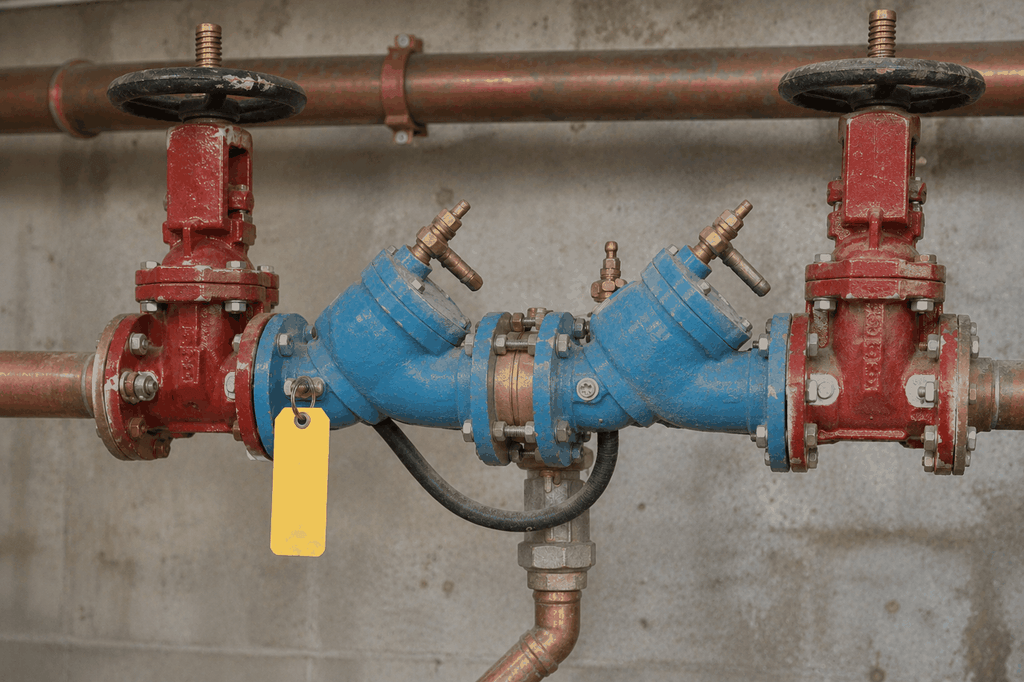
Draining a Model 765 pressure vacuum breaker
Use this example only if the label identifies a FEBCO 765 and the piping matches its winterization diagram. Look for a drain below the assembly on each side. If either drain is missing, have the layout checked before trying to empty the device through its test ports.
Use the A–E diagram on page one of the FEBCO Model 765 freeze-protection instructions (IS-F-765-Winterization). Match each valve to the drawing before you move a handle.
Close A, the main irrigation supply shutoff. It stays closed through winter.
Open B and E, the inlet and outlet drains. Collect any water discharged indoors.
Open C and D, the shutoffs on the device, and its test cocks as directed. Let the assembly and connected piping drain.
As the piping and assembly drain, slowly move the assembly’s ball valves to about 45 degrees so water trapped inside each valve can escape. After drainage, leave the assembly shutoffs, drains and test cocks halfway open for winter. The main supply shutoff (A) stays closed.
For a blowout, the technician uses a different valve setup to isolate the assembly. After the lawn zones are clear, the technician should restore the winter positions and leave the main supply shutoff closed.
For any other model, use its own freeze-protection sheet. A different assembly may have different drains and winter valve positions.
Backflow drainage during a sprinkler blowout
For a scheduled blowout, ask the technician to include the backflow preventer and both connecting pipes when describing the work. If the visit has already taken place, give the service office the date and ask them to check the technician’s notes before moving any handles.
On the FEBCO setup above, the technician connects on the sprinkler side of the device and isolates the assembly as shown in the manual. Leave compressed-air work to a qualified irrigation professional. For help listing zones and arranging access, use the sprinkler blowout checklist.
Freeze protection for exposed pipes and valves
A cover can shield an exposed assembly after drainage. Water trapped inside can still freeze under a cover. Choose protection suited to the model and keep air vents, relief openings and drain outlets clear.
If the first freeze has already passed, look for a split housing or signs of leakage. An undamaged-looking cover tells you little about the parts underneath. If you suspect freeze damage, leave the irrigation supply off and arrange an inspection before turning the water back on.
Winter service records for spring startup
Photograph the valve positions at the end of the visit. Keep the photo with the service receipt and jot down the details you’ll want when the water comes back on in spring.
Backflow device: Record the model, the date and who drained the assembly and its connecting pipes.
Sprinkler lines: Note which zones were cleared, including any separate drip lines or areas the technician couldn’t reach.
Spring follow-up: List leaks, stiff valves, repairs or testing still due. Keep the latest test report with the winter service record.
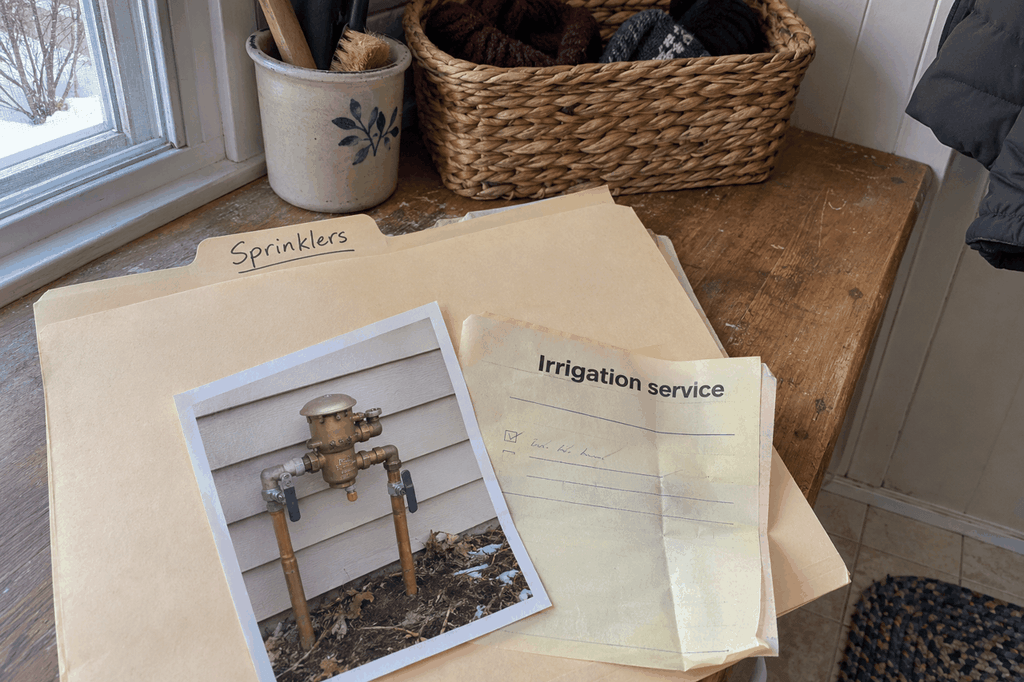
Your winterization receipt records which parts were drained. The separate backflow test report records whether the assembly passed its test. In the City of Rochester, containment backflow assemblies require annual testing. Elsewhere in the Finger Lakes, your water supplier can confirm what paperwork is due before or after spring irrigation startup.
Sprinkler winterization in Rochester and the Finger Lakes
When booking sprinkler winterization in Rochester or the Finger Lakes with Irrigation Tech, mention where the backflow preventer is and whether the shutoff is indoors. That helps the technician plan access to both sides of the assembly.
Backflow winterization FAQs
Do I need to winterize a sprinkler system I didn’t use this summer?
What matters is whether water entered the system. The supply valve may have been opened in spring even if the controller never ran a watering cycle. If you can’t confirm the system stayed drained and isolated since last winter, have it checked before freezing weather.
Does closing the irrigation shutoff turn off water inside my house?
A dedicated irrigation shutoff serves the sprinkler branch. Your home’s main shutoff serves the house as well. When the valves are unlabeled or the branches are hard to trace, have the irrigation shutoff identified before closing one.
Does a backflow preventer in a heated basement need winter attention?
Check where the pipes leave the heated space. The assembly may stay warm while a pipe through the foundation or along an exterior wall is exposed to freezing. Ask which sections need drainage for that particular layout.
Do I need to be home for a winterization visit?
It depends on what the technician can reach. A basement shutoff, garage controller or locked side gate may require someone to provide access. Tell the service office where each is located when arranging the visit.
Can I water new plants after the sprinkler system has been winterized?
Use a watering can or a hose supplied by a separate working faucet. Leave the winterized irrigation branch closed. If it is reopened, water can enter the assembly and lines again, and they will need to be checked and drained before another freeze.