
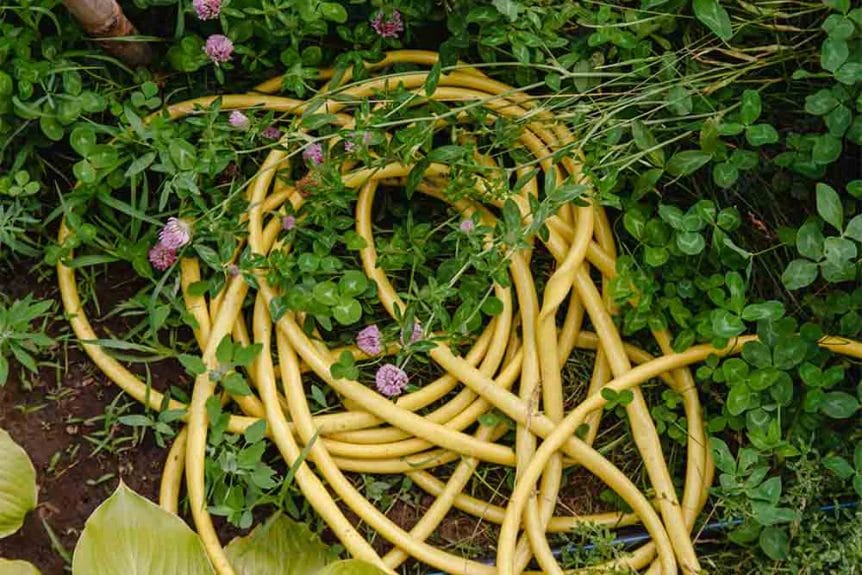
Imagine: a vibrant, healthy lawn and garden, flourishing virtually hands-free. Picture your weekdays and weekends: free from the dirty, wet hassle of wrestling with tangled hoses and uncooperative hose reels, hurrying around the yard hauling and connecting and disconnecting hoses, the endless cycle of moving sprinklers, and the nagging worry of whether you’ve watered enough—or too much.
Sprinkler system vs. Hose at a glance
A hose gives you a simple way to water individual plants or reach an area that needs extra attention. Watering an entire lawn is a different routine. You may need to move sprinklers, reconnect hoses, and keep track of how long each area has been watered.
An automatic sprinkler system replaces that repeated setup with a layout designed around your property. Lawn areas and planting beds can receive different types of irrigation, with a controller managing when each area is watered.
Here’s how the two approaches compare:
| What matters | Watering with a hose | An automatic sprinkler system |
|---|---|---|
| Everyday effort | You position the hose or sprinkler and manage the watering routine. | Installed heads and drip lines water the areas included in the system layout. |
| Scheduling | You turn the water on and off yourself unless your setup includes a timer. | A controller manages the programmed watering schedule. |
| Coverage | Coverage depends on where you place the sprinkler and when you move it. | Head locations and overlapping spray patterns are planned around the property. |
| Different planting needs | You move between the lawn, beds, and individual plants as needed. | The design can include lawn sprinklers and separate drip irrigation for planting areas. |
| Weather response | You adjust your routine or timer when conditions change. | Suitable controllers and sensors help prevent unnecessary watering. |
| Getting started | A hose-based setup does not require an underground system installation. | The system requires a property assessment, a proposed layout, installation, and any applicable permits. |
| Ongoing care | Hoses, connections, nozzles, and portable sprinklers need attention. | Controllers, heads, valves, and lines need inspection, seasonal adjustment, and winterization. |
The practical difference is how much of the watering routine you want to manage yourself. Irrigation Tech’s installation process considers the water source, pressure, soil, slopes, lawn, and plantings before a layout is proposed.
Life is short, and your time is scarce.
Every moment spent undoing a kinked hose or dealing with a leaky hose connection or nozzle is a moment stolen from your family, passions, work, or simply enjoying the peace of your beautiful lawn and landscape.
The Regular Watering Routine: More Than Just a Chore
Let’s be honest: manual watering is a frustrating, wet, and dirty job. Early morning is best for watering, when your calendar is already overbooked. Whether it’s getting ready for work, making breakfast, getting kids to school, exercising, or heading for the gym, courts, or golf course, battling hoses several mornings a week is not how you want to start your day.
And those “hose headaches”? We all know them:
- Dirty, tangled, leaky, and unsightly hoses and sprinklers that are always in the way.
- Hose tenders that are hard to unwind or rewind because they tangle and jam.
- The “never-kink” hose that always kinks and twists like a pretzel, refusing to lie flat or straighten out.
- Hoses snagging on patio furniture, hardscaping, or cherished plants.
- The constant “tug of war” with hoses that never quite reach where you need them to go.
- Spray nozzles are dripping more on you than on your landscape.
- Sprinklers that sputter, stick, or simply stop working.
- The end result? Grimy hands, soaked clothes, and shoes, wasted time, and wondering if you’ve done enough—or too much–watering.
Don’t forget:
Worse still are the unintended consequences of your best intentions. Forget to move a sprinkler, and you face overwatering, flooded lawns, and precious water (and money) washing down the drain. Underwater due to a busy schedule, and your landscape becomes stressed and vulnerable. Potentially ruining years of growth, hard work, and the money you’ve invested in your plantings.
And what happens when life takes you away? An unexpected business trip, a well-deserved vacation, or a blissful time at the lake house – who ensures that your landscape doesn’t wither away while you are away? Certainly not Mother Nature.
How an automatic sprinkler system waters differently
An automatic system starts with a plan for the areas you want watered. Instead of moving one sprinkler around and estimating when each spot has had enough, the system uses installed heads, drip lines, and programmed watering times.
The layout matters as much as the equipment. Your lawn, planting beds, slopes, and water supply all help determine how the system should be arranged.
A layout built around your property
Before preparing a proposal, Irrigation Tech reviews the property and the areas you want irrigated. That assessment includes the water source and pressure, lawn and plantings, slopes, soil conditions, and variations in the property’s growing conditions.
Sprinkler patterns are planned to overlap so the outer edges receive water as well. The aim is to provide coverage across the intended area rather than leave you adjusting a portable sprinkler to reach missed spots.
Different watering methods for lawns and planting beds
Your lawn and your planting beds do not have to share the same watering setup.
Irrigation Tech designs lawn-area spray and sprinkler systems as well as planting-area drip and spray systems. A proposed layout can include both, with different zones serving different needs.
That gives the design more flexibility than asking one portable sprinkler to cover the grass, shrubs, and garden beds from the same position.
Scheduled watering with weather controls
The controller manages the watering schedule, while appropriate weather features and sensors help the system respond when water is not needed.
Irrigation Tech installs rain sensors and offers WiFi controllers connected to local weather services. Depending on the equipment included, the system can interrupt or adjust watering in response to rain or moisture conditions.
Those functions should be considered when choosing the system. Remote access, scheduled watering, and weather response are separate features, so it helps to understand what your proposed controller and sensors will do.
Seasonal care keeps the system working properly
Automatic watering reduces the daily work of moving hoses, but the system still needs care.
During spring start-up, Irrigation Tech pressurizes the system, checks controller settings, adjusts the rain sensor, and inspects the zones, heads, and drip lines. Mid-season inspections address changes in weather, plant growth, settings, and equipment condition. Fall winterization prepares the system for freezing weather.
That ongoing attention helps keep the system watering the areas it was designed to serve.
Your Landscape: A Living, Growing Investment
You’ve likely invested significantly in your landscape – thousands, perhaps tens of thousands of dollars, in beautiful trees, shrubs, flowers, and lush turf. Beyond the financial cost, there’s the irreplaceable time and care poured into planting, nurturing, and watching it mature. That’s an investment you can’t get back if plants die from inconsistent or improper watering.
You pay professionals for services like plowing, mulching, mowing, aerating, fertilizing, and applying other landscape treatments. But finding and paying someone to water your landscape several times a week is impractical and expensive, leaving it as yet another DIY chore on your already long list of To-Dos.
There’s a Cleaner, Easier & Smarter Way to Water:
An automated landscape irrigation system will transform your relationship with your yard. Heave those hoses for good, preserve more of your personal time, protect your green investment, and regain some peace of mind.
Fire Your Hose & Install Automated Irrigation
An intelligent, WiFi controlled, underground irrigation system designed, installed, and serviced in the spring and fall by Irrigation Tech will deliver the right amount of water precisely where it’s needed and when it’s needed, all season long: Efficient WIFI controllers turn our system off before it rains and don’t run when it’s raining or after a rain. And better still, you can control them from anywhere—or have us do it for you!
Trade irritation for irrigation. Making a smart switch to a smart, automated irrigation system installed and serviced by Irrigation Tech delivers a wealth of benefits for your lifestyle and landscape, allowing you to:”
- Reclaim Your Precious Time: Imagine the extra hours each week for family, hobbies, or pure relaxation.
- Protect Your Investment: Ensure consistent, optimal hydration for healthy growth, safeguarding your financial outlay and years of cultivation.
- Water Wisely, Not Wastefully: Automated irrigation systems distribute water more slowing and over a longer period than hoses to efficiently target roots, minimize runoff and conserve water. Bottom line: it’s good for your plants, your wallet, and the environment.
- Effortless Perfection: Simply set the controller and forget it (or let our Irrigation Tech team manage your WiFi-enabled system remotely) and enjoy the results.
- Peace of Mind, Home or Away: Your landscape thrives whether you’re just starting a really busy day, sleeping in, on a weekend getaway, or on an extended trip.
The Regular Watering Routine: More Than Just a Chore
Let’s be honest: manual watering is a frustrating, wet, and dirty job, which should be done in the early morning when your calendar is already overbooked. Whether it’s getting ready for work, making breakfast, getting kids to school, walking the dog, exercising, or heading for the gym, courts, or golf course, battling hoses several mornings a week is not how you want to start your day.
FAQ
Does a sprinkler system use more water than a hose?
A properly designed and maintained system can help avoid wasted water through planned coverage, scheduled watering, and rain or soil-moisture sensors. Actual use depends on your watering needs and system settings.
How long does a sprinkler system installation take?
Small systems usually take one to two working days, while mid-size systems generally take three to six days. Larger systems may take seven days or longer, with planning, permits and scheduling adding time before installation.
Do I need a permit or a backflow test for a sprinkler system?
Permit requirements depend on your location and water source. Irrigation Tech explains that public-water systems require backflow prevention, applicable permits, initial testing and annual backflow testing.
Can a sprinkler system be installed in phases?
Irrigation Tech offers phased installation to help accommodate your budget. Discuss the areas you want watered now and those you may want to add later during the planning process.
Will installation tear up my yard?
Irrigation Tech uses a vibratory plow to install supply lines with minimal lawn disturbance. Some localized digging is still needed for sprinkler heads, valves and other components.
“For a Beautiful Lawn, Just Add Water!”
Contact Irrigation Tech today at Call us at 585-225-0380 or email info@irrigationtech.com Discover how easy it is to achieve the beautiful, healthy, and effortlessly maintained landscape you dream about and deserve.