
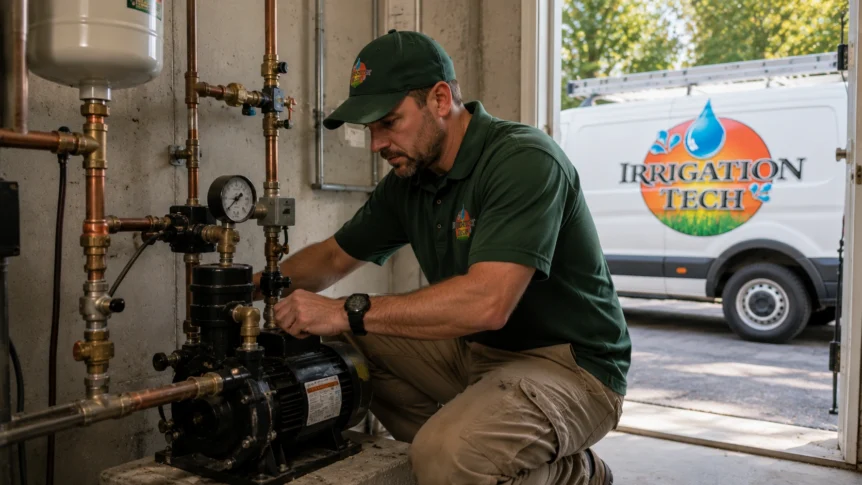
The size of an irrigation pump comes down to two numbers: how many gallons per minute (GPM) your system’s largest zone demands, and how much pressure (PSI) it takes to push water from the source to the last sprinkler head.
For most properties in the Finger Lakes Region, those two numbers determine whether you need a booster pump, a submersible pump, or no additional pump at all. The right answer depends on your water supply and system design. That’s why pump sizing always comes after the system is planned, not before.
The two Numbers that actually determine pump size
GPM measures flow
Each sprinkler head has a rated flow at its operating pressure: rotor heads typically draw 2 to 4 GPM each, spray heads 1 to 2 GPM each. Add up the heads running simultaneously in your largest zone, and that’s the minimum GPM the pump must deliver. A zone with eight rotor heads pulling 3 GPM each needs at least 24 GPM from the source.
PSI measures pressure
Most residential sprinkler heads need 30 to 50 PSI at the head to pop up correctly and cover their rated radius. By the time you account for friction loss in the supply lines and any elevation between the source and the sprinklers, the pump usually needs to deliver closer to 65 to 70 PSI to make that happen consistently.
Horsepower doesn’t determine pump size; GPM and PSI do. A pump selected by horsepower alone tends to be wrong in at least one direction, and sometimes both.
The system is designed first. Once we know your zone count, head types, pipe runs, and water source, pump sizing is math, not a judgment call made at the hardware store.
Which pump does your property need?
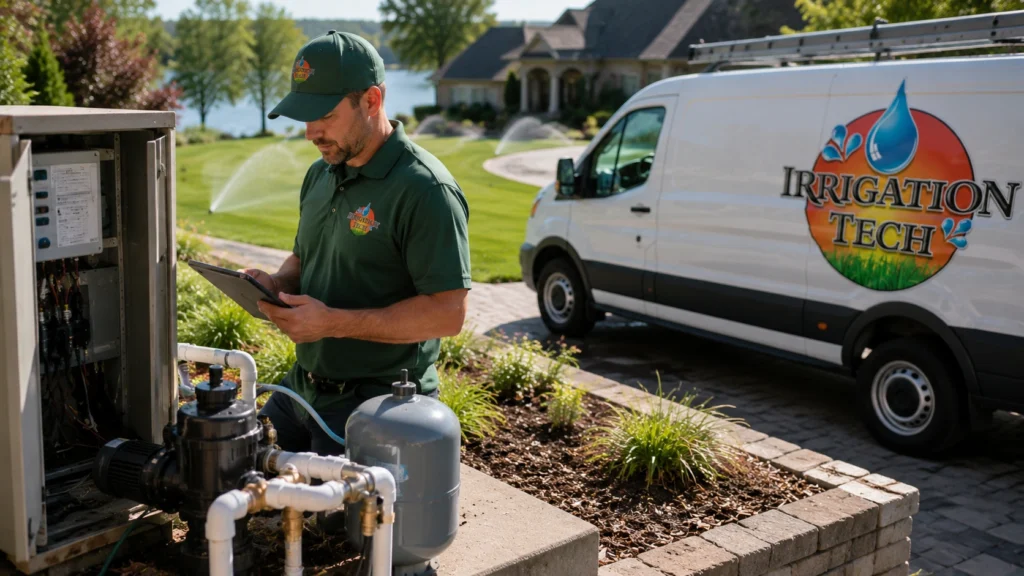
Most pump decisions start with one question: where is the water coming from?
Properties on municipal supply in the Finger Lakes Region receive static water pressure in the 40-130 PSI range. For a sprinkler system to work correctly, we need at least 65 PSI, and we prefer 70. Municipal pressure can drop during peak demand periods on summer mornings, when most of the neighborhood is watering at the same time.
Properties that arrive below that threshold get a booster pump installed in the basement or mechanical closet. It activates when the irrigation system runs, raising the incoming pressure by 20 to 30 PSI. The exact boost depends on the incoming supply and the system’s design, so the pump gets selected after those variables are confirmed.
Properties with a pond, lake, or well follow a different path. A stainless steel or composite submersible pump goes directly into the water body inside a protective sleeve. When a zone starts, the pump activates and pushes water up into the distribution lines at the pressure and flow the system requires, then shuts off when the last zone finishes.
| Submersible Pump | Booster Pump | |
| Water source | Pond, lake, well, creek | Municipal water line |
| Installed | Submerged in a water body | Basement or mechanical closet |
| Pressure | Generates full system pressure from the source | Increases incoming PSI by 20 to 30 |
| NYS backflow device required | No (non-potable source) | Yes, if on public water supply |
| Best for | Lakefront, rural, and pond properties | Properties with incoming PSI below 65 |
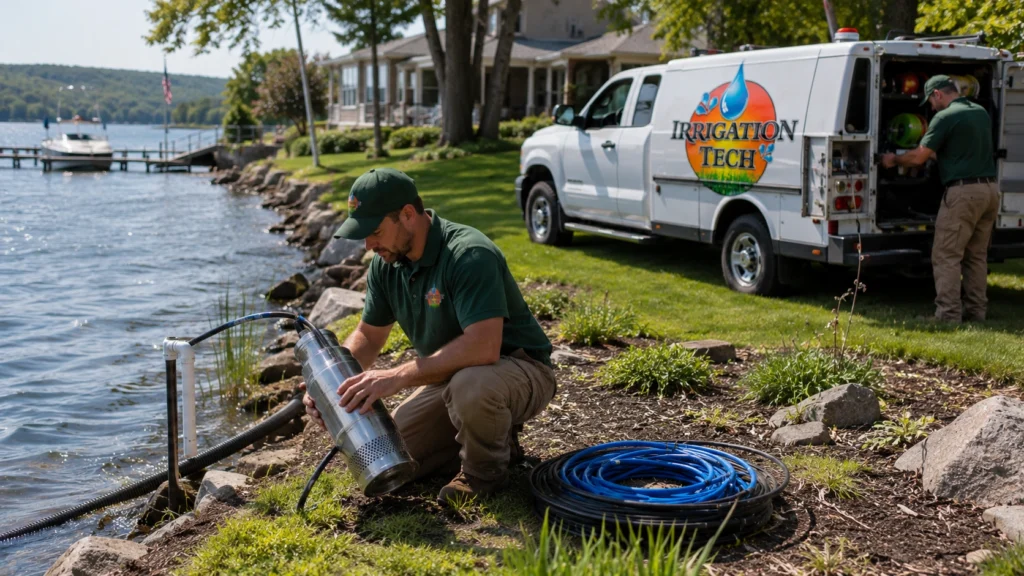
One benefit of the non-potable path that’s easy to overlook: because the irrigation water never enters the potable supply, the NYS-required annual backflow preventer test and the permit that comes with it aren’t required. For properties on Canandaigua, Keuka, or any of the Finger Lakes, where pond water is a realistic option, that removes a recurring cost from the seasonal budget every year.
Signs your current pump is the wrong size
If you’ve taken over a system from a previous owner, or if a system that worked fine a few years ago is now struggling, certain patterns point to a sizing problem.
Signs the pump is too small
Heads in the far sections of a zone won’t fully pop up while nearby heads spray normally. Short cycling (the pump kicks on, runs briefly, shuts off, then restarts) puts repeated strain on the motor and significantly shortens its lifespan. Coverage gets gradually worse, especially if zones have been added over time.
Signs the pump is too large
Heads spray with too much force at zone start, and you hear a thud in the pipes when zones close. That’s water hammer, and it loosens fittings over time.
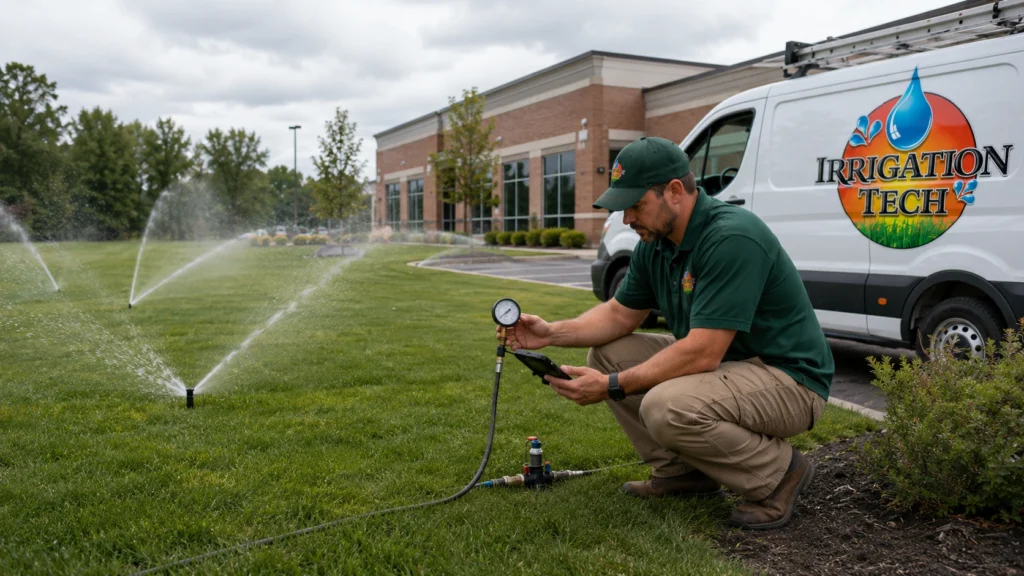
Low pressure and weak zones don’t always come back to the pump. A stuck valve, clogged head, or damaged supply line causes the same symptoms. Proper diagnosis through troubleshooting identifies the real source before anything gets replaced.
The mistake that costs the most
Replacing a pump before diagnosing the system is the most expensive wrong move we see. A homeowner notices weak coverage on a zone, swaps in a larger pump, and ends up with the same weak coverage because a clogged head on zone 3 was the actual problem the whole time.
Selecting a pump before the system is fully designed is the second version of the same error. Zone counts, head types, pipe runs, and water source all feed into the pump calculation. Choose the pump first and design around it, and the system will underperform from day one. Sometimes it’s obvious. Sometimes it only shows up on the water bill.
When we work on a new installation or take over an existing system, pump selection is part of the design process. It’s not a line item decided in isolation.
Frequently asked questions
How many GPM does a residential irrigation system need?
Most residential sprinkler systems fall in the 10 to 20 GPM range, depending on head type and zone size. Rotor heads draw 2 to 4 GPM each; spray heads draw 1 to 2 GPM each. Add up the heads running simultaneously in your largest zone to find the pump’s minimum flow requirement. A zone with eight rotor heads averaging 3 GPM each needs at least 24 GPM from the source.
What PSI do I need for my sprinkler system to work correctly?
Most residential sprinkler heads need 30 to 50 PSI at the head to pop up and cover their rated radius. After accounting for friction loss in the pipes and any elevation between the source and sprinklers, the pump typically needs to deliver 65 to 70 PSI. In the Finger Lakes Region, we prefer 70 PSI because municipal pressure can drop on peak summer mornings when the whole neighborhood is watering at once.
What’s the difference between a booster pump and a submersible pump for irrigation?
A booster pump increases the pressure of an existing municipal water supply where the incoming PSI falls below 65. It installs indoors and raises incoming pressure by 20 to 30 PSI when the system runs. A submersible pump draws water from a non-potable source like a pond, lake, or well, generating full operating pressure from scratch. The right choice depends entirely on where your irrigation water is coming from.
Can I use a pond or lake instead of municipal water for irrigation?
For many Finger Lakes properties, a pond or lake is the practical choice. A submersible pump draws directly from the non-potable source, eliminating the monthly water bill for running the irrigation system. It also removes the NYS requirement for an annual backflow preventer test, since the water never ties into the potable supply. The pump is sized and installed based on the property’s specific source conditions and system demand.