
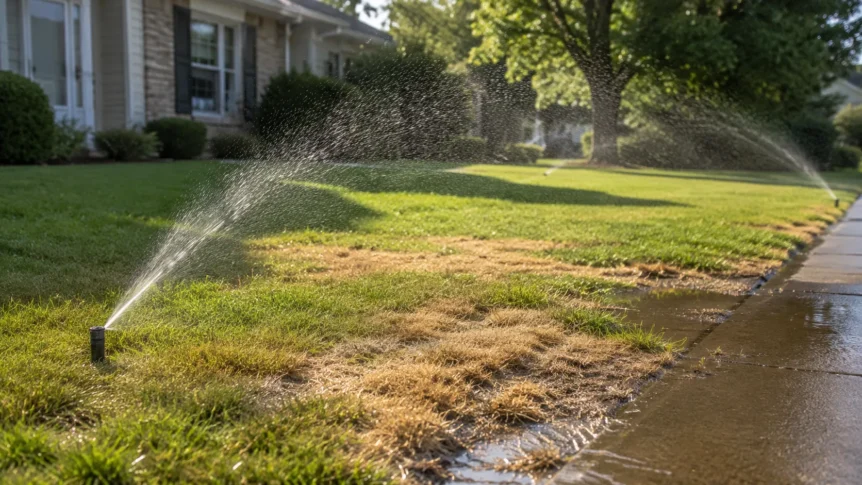
The 5 most common sprinkler system problems are clogged or broken heads, low water pressure, zone failures, controller and scheduling errors, and underground pipe leaks. Most show up as visible lawn symptoms first: brown patches, soggy spots, or zones that go quiet while others run normally.
Here’s how to read what you’re seeing and figure out where to look.
Why a Wet Season Can Hide a Broken System
Most of the problems above only show up when a zone is actually running. During a stretch of regular rain, systems sit off for weeks, and a cracked head, stuck valve, or slow leak can go completely unnoticed the whole time. The lawn looks fine because the rain is doing the watering, not because the system is working.
The fix is a short weekly test, not a full watering cycle. Run each zone manually for a minute or two, once or twice a week, even when it’s wet. You’re not trying to water the lawn, just checking that every head pops up and every zone shuts off when it should.
If it’s been a while since anyone’s looked at the system beyond that, book a mid-season check-up and have it inspected zone by zone while the weather’s still cooperating.
The 5 most common sprinkler system problems
Your lawn is usually the first to report a problem. Dry or brown patches in a running zone usually mean sprinkler heads aren’t covering the area properly, whether due to a clog, a cracked housing, or poor aim. If those patches appear at the far edge of the coverage rather than in the center, low water pressure is the more likely cause. Soggy areas that stay wet between watering cycles usually mean a valve stuck open or an underground leak.
A water bill that’s noticeably higher than the same period last year is often the earliest sign of a slow, hidden leak. And if the system runs on schedule but the lawn is still struggling, check whether a rain sensor or a soil moisture sensor is in override mode.
Here’s where each of those patterns leads.
1. Clogged or damaged sprinkler heads
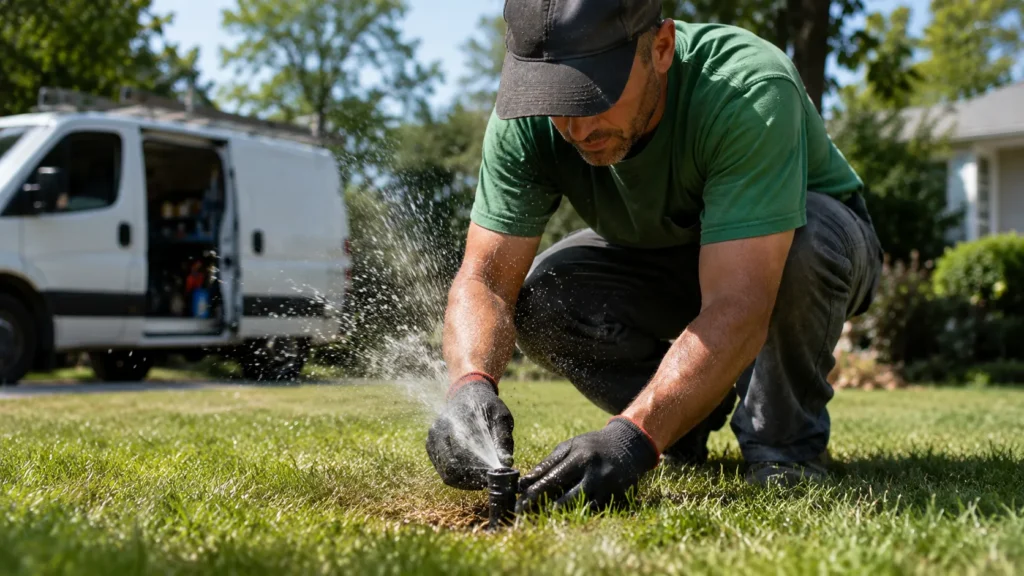
A clogged or broken head is the most frequently repaired item we see. A head that’s cracked or broken either won’t rise at all or sprays in every direction except where it should. A clogged nozzle produces patchy coverage and a dry arc in the lawn, even when the zone is running.
Heads that looked fine in the fall often crack at first pressurization in spring. Water left in the riser over winter expands as it freezes, and the plastic housing silently absorbs that stress. If an entire zone underperforms rather than one head, the problem is usually pressure or zone supply, not the heads themselves.
2. Water pressure problems
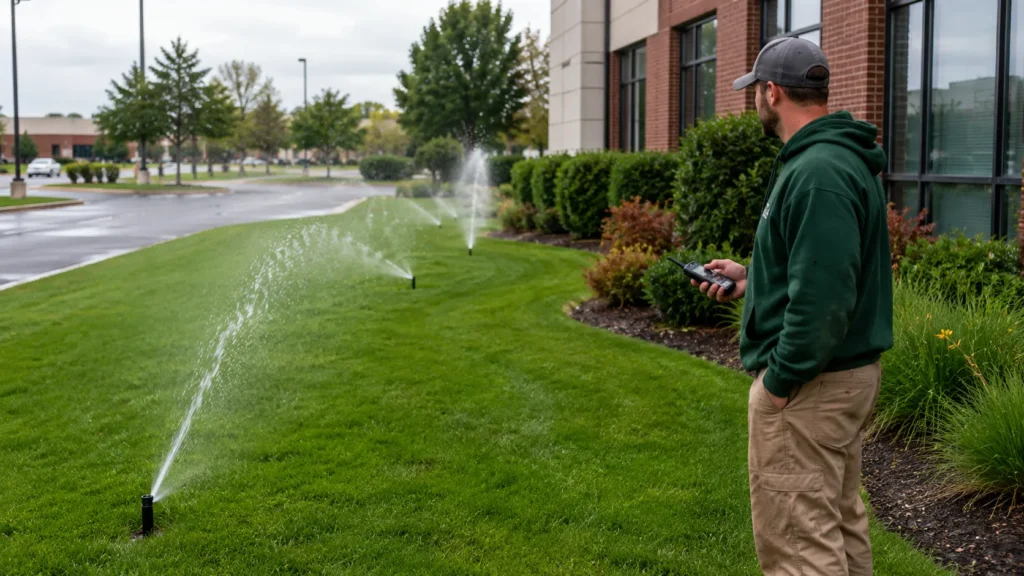
Low pressure shows up as heads that barely pop up, spray that falls short of its intended arc, or one zone running noticeably weaker than the others. That single-zone pattern almost always traces to something between the control valve and the zone’s heads, not a whole-system supply problem.
Common causes in one weak zone are a slow underground leak on the lateral line (pressure bleeds off before reaching the heads), a debris clog inside the zone valve, or a partially closed manual bleeder on the valve. Freeze damage to buried fittings accounts for a significant share of the pressure losses we trace each spring.
A zone that ran fine through September can fail its first spring startup because a fitting shifted over winter, causing the kind of underground irrigation leaks we most often trace during spring startups.
3. A zone that won’t start, or one that won’t stop
Both situations almost always point to a valve problem.
When a zone doesn’t activate, the fault is almost always downstream of the controller: the solenoid (the coil that signals the valve to open), the valve diaphragm (the rubber seal controlling water flow), or the wiring between controller and valve box. If the controller shows the zone running but no water appears, check for damaged field wire first, since corroded wiring can closely mimic the symptoms of a failing sprinkler valve.
When a zone won’t shut off, the diaphragm has usually failed to reseal, or the solenoid is stuck open. Shut off the controller. If the zone keeps running, the valve isn’t responding to any signal. That’s a mechanical repair, not a scheduling fix.
4. Controller and schedule problems
Most controller problems are either a programming error or hardware failure. Setting two start times for the same program silently doubles the watering cycles. A program reset after a power interruption may be running at factory defaults.
Hardware failure is less common but harder to catch. A board damaged by a lightning strike can appear normal right up until the display and outside activity stop matching. One frequently missed cause of a dry lawn with a running system: a soil moisture sensor or rain sensor overriding the program. These sensors can get stuck reading stale conditions, particularly in July when a brief rain holds the sensor in the off position for days.
5. Underground leaks
An underground leak usually announces itself one of three ways: a persistently soggy patch (often in a straight line between two heads), pressure loss in one zone with no visible source, or a water bill that jumped with no explanation. The wet area doesn’t always sit above the break.
The freeze-thaw cycling we see through February and March puts specific stress on buried fittings at elbows, tees, and transitions, where repeated soil movement can open hairline cracks fully under spring pressure. Systems that weren’t properly blown out each fall carry the highest risk. If soggy areas appear between cycles rather than during them, check whether a valve is stuck open before digging.
What if the system wasn’t installed by us?
We service all residential and commercial irrigation systems throughout the region, regardless of who installed them. Many of the problems we see most often appear in systems that have changed hands or haven’t been maintained, including those where the original contractor no longer does backflow testing, which New York State requires annually. If you don’t know your system’s history or can’t get full-cycle coverage from your current contractor, one call handles it.
When to call for a professional inspection
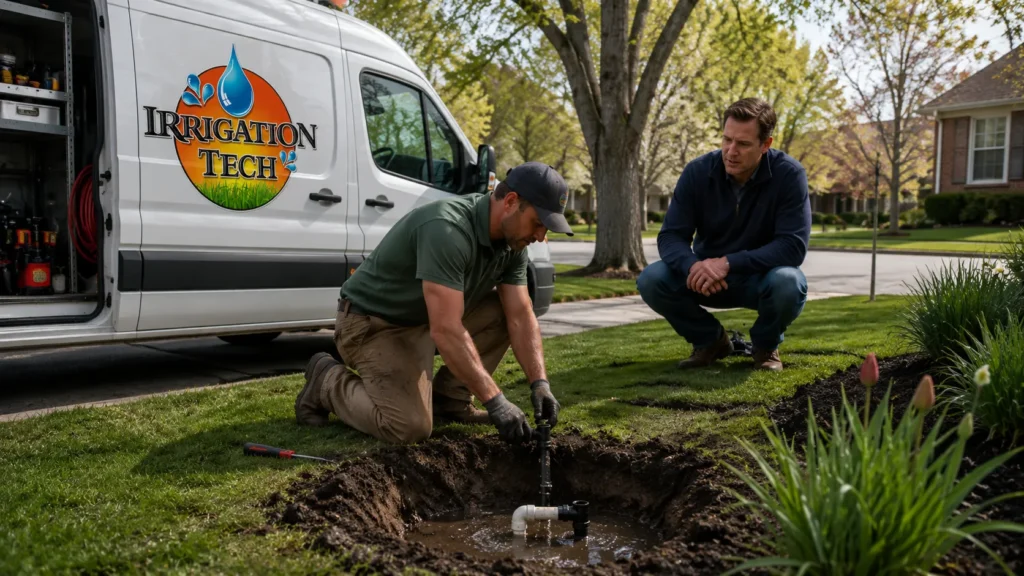
If you’ve confirmed the controller is powered on, the main shut-off valve is open, and the problem still hasn’t been resolved, a professional diagnostic visit is the next step. Call when the problem is underground: soggy areas, unexplained pressure loss, or a billing spike all need the right tools to locate. Call when a zone is intermittent (working one day, failing the next), because those failures are the hardest to self-diagnose and tend to worsen.
And if you’re starting up after a tough winter without a professional check, don’t skip it. A professional irrigation system inspection covers every zone, all accessible valves, the controller, and the backflow preventer. A mid-season irrigation check-up catches problems before they become peak-season repairs.
Frequently asked questions
Why do I have brown spots on my lawn even though my sprinklers run every day?
Brown patches in a running zone usually mean the water isn’t reaching those spots. Common causes are a clogged nozzle, a broken head that isn’t rising fully, a misdirected head spraying pavement instead of turf, or pressure too low to reach the far end of the coverage arc. Running daily doesn’t guarantee full zone coverage.
Why does one zone have much lower pressure than the others?
A single weak zone almost always traces to something between the control valve and the zone’s heads. Common causes are a slow leak on the lateral line, a debris-clogged valve, or a partially closed manual bleeder. Freeze damage to buried fittings is a frequent cause of a zone that ran fine in the fall, losing pressure at the first spring startup.
One zone keeps running and won’t shut off. What’s wrong?
A zone that won’t stop is almost always a stuck valve. The diaphragm may have failed to reseal, or the solenoid is holding it open. Shut the system off from the controller. If the zone keeps running, the valve isn’t responding to any signal. Reprogramming won’t fix it. The valve needs hands-on repair to close.
Can you service a sprinkler system that wasn’t installed by Irrigation Tech?
Yes. We service residential and commercial systems throughout the region, regardless of who installed them. If you inherited a system or your original contractor is no longer available (including for the annual NYS-required backflow test), we can assess it, handle repairs, and set up ongoing service. Learn more about our sprinkler repair service.
If something isn’t right and you’ve checked the basics, a diagnostic visit will tell you exactly what’s happening and what the fix is. We work on all systems throughout Monroe County and the Finger Lakes Region, not just the ones we installed. Call (585) 225-0380 or 1-877-8-IRRIGATE, or schedule online.